

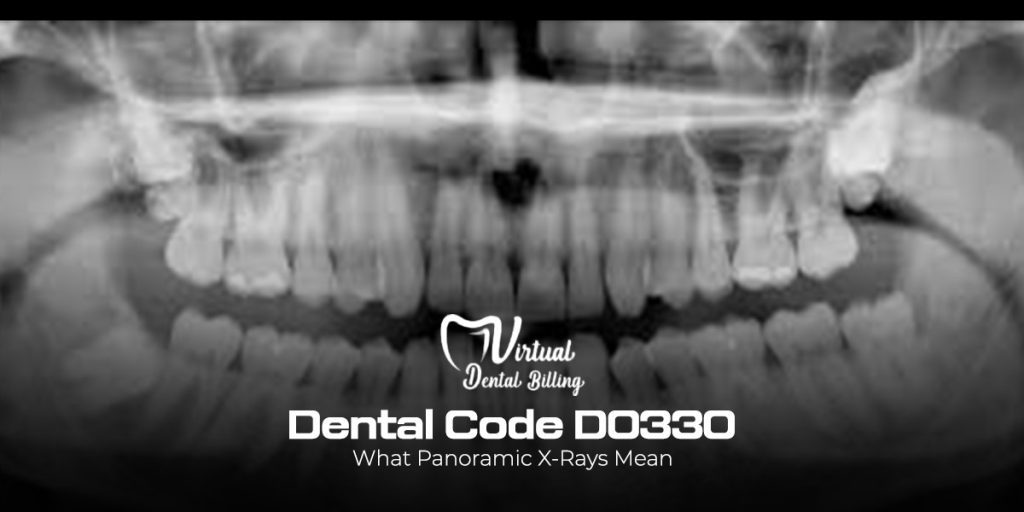
Dental teams lose time when D0330 gets mixed with full mouth X-rays or bitewings. The D0330 dental code describes one panoramic radiographic image, which means one extraoral dental X-ray that shows the teeth, upper jaw, lower jaw, and nearby structures in one 2D image.
The ADA lists D0330 for a panoramic radiographic image, so dental offices should not treat it like D0210 or D0274. This guide explains what the code means, when it fits, and what dental teams should check before billing it.
D0330 dental code: This CDT code reports one panoramic radiographic image.
Panoramic X-ray: This 2D dental image shows the full mouth area in one wide view.
Extraoral X-ray: This image places the receptor outside the mouth during the scan.
What Does Dental Code D0330 Mean?
Dental Code D0330 means the CDT code for panoramic X-rays that show the full mouth in one wide 2D image. Dental teams use this code when the dentist needs one broad view of teeth, jaws, bone, TMJ areas, and nearby structures before diagnosis or treatment planning.
Dental Code D0330 Definition
Dental Code D0330: the CDT code used for one panoramic radiographic image.
Panoramic X-ray: one extraoral dental image that shows the upper jaw, lower jaw, all teeth, jaw joints, and nearby bone in one view.
This image comes from outside the mouth, so it differs from bitewings and periapical X-rays. Those smaller images focus on limited tooth areas, while a D0330 panoramic X-ray gives the dentist a wider view.
What Dental Teams Use D0330 to See
Think of Dental Code D0330 as the code for the “big picture” image. It does not give the same close-up detail as bitewings, but it helps the dentist review larger structures in one scan.
For example, D0330 panoramic X-rays often help dentists check:
- Wisdom teeth position
The image shows the angle, depth, and growth stage of third molars. - Jawbone structure
The dentist reviews bone shape, bone loss, and jaw changes. - Tooth eruption patterns
The image helps track how adult teeth develop in children and teens. - Missing or extra teeth
The scan shows teeth that did not erupt or teeth that formed outside the normal pattern. - TMJ and sinus areas
The image gives a broad view of the jaw joints and the maxillary sinus areas. - Cysts, tumors, or jaw lesions
The dentist checks for larger changes that small intraoral X-rays might miss.
Quick Checklist: When D0330 Fits the Visit
Dental Code D0330 fits best when the clinical note shows a real reason for the panoramic X-ray. Code choice should follow the dentist’s exam, not office habit.
Use this checklist before billing D0330:
- The dentist ordered the panoramic X-ray after an exam.
- The patient record includes the reason for the image.
- The image supports diagnosis or treatment planning.
- The chart notes mention a concern, finding, or clinical goal.
- The team did not bill D0330 as a substitute for D0210.
- The team checked the patient’s recent X-ray history.
- The claim matches the image type taken that day.
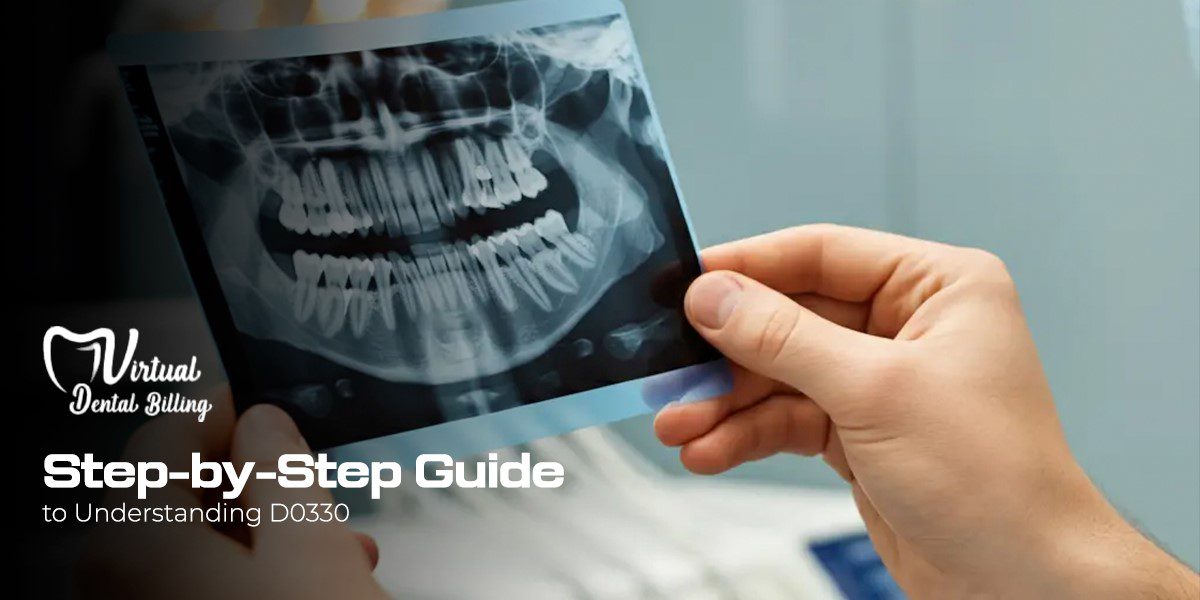
Step-by-Step Guide to Understanding D0330
- Review the reason for the X-ray.
The dentist should link the image to a clinical need, such as wisdom teeth, trauma, growth review, surgery planning, or pathology screening. - Compare the image type with the code.
D0330 reports one panoramic radiographic image, while D0210 reports a full mouth series of intraoral images. - Check the patient’s insurance history.
Many dental plans set frequency limits for panoramic X-rays, often once every 3 to 5 years. - Link the finding to the note.
The note should describe what the dentist looked for and what the image showed. - Send the claim with the correct code.
The billing team should report Dental Code D0330 only when the practice took a panoramic X-ray.
Simple Takeaway
Dental Code D0330 means one panoramic X-ray, not a full mouth series, and not bitewings. Good billing starts when the code, image, clinical reason, and documentation all match.
Why Do Dentists Use Dental Code D0330 for Panoramic X-Rays?
Dentists use Dental Code D0330 for panoramic X-rays when one wide image gives better clinical value than several small images. This code fits visits where the dentist needs to check wisdom teeth, jaw growth, missing teeth, trauma, bone changes, or surgical planning in one full-mouth view.
Main Reason Dentists Order a D0330 Panoramic X-Ray
Dentists order a D0330 panoramic X-ray when the full mouth view helps answer one clear clinical question. The image should connect to a real concern, not a routine habit.
For example, a 17-year-old patient with third molars #17 and #32 often needs one wide image before an extraction referral. The dentist needs to review tooth angle, root growth, and nerve space before planning the next step.
Most Common Clinical Uses
Dental Code D0330 panoramic X-rays support several common dental visits. Each use should link to the patient’s chart note and treatment goal.
- Wisdom teeth review
The dentist checks the third molar position, root shape, and closeness to the nerve. - Growth and development check
The dentist reviews adult tooth eruption, missing teeth, extra teeth, and jaw growth in children or teens. - Orthodontic planning
The orthodontic team reviews jaw alignment, tooth count, impacted teeth, and eruption paths before braces. - Oral surgery planning
The dentist checks bone shape, tooth roots, sinus areas, and key jaw structures before surgery. - Pathology screening
The dentist looks for cysts, tumors, jaw lesions, fractures, or bone changes that smaller films might miss. - Trauma review
The dentist reviews jawbone injury, condyle changes, or facial bone concerns after an accident. - Limited tolerance for intraoral X-rays
Some patients struggle with bitewings due to gag reflex, trismus, or special care needs.
Quick Checklist: Does D0330 Make Sense Here?
Use this checklist before the team codes the visit with Dental Code D0330:
- The dentist found a clinical reason during the exam.
- The patient needs a full-mouth view, not only a close-up.
- The image supports diagnosis, referral, or treatment planning.
- The chart note names the reason for the panoramic X-ray.
- The note explains what the dentist expected to find.
- The dentist recorded the image findings after review.
- The code matches the image taken that day.
Step-by-Step Guide for Clinical Use
- Start with the patient’s concern.
The dentist should identify the problem first, such as wisdom teeth pain, delayed eruption, trauma, or surgery planning. - Choose the right image type.
The dentist should choose Dental Code D0330 when panoramic X-rays offer the full-mouth view needed for that concern. - Write the reason in the chart.
The note should state the exact clinical purpose, such as “evaluate impacted #17 and #32 before oral surgery referral.” - Review the image findings.
The dentist should record what the panoramic image showed, such as impaction angle, bone change, missing tooth, or no pathology found. - Match the claim to the record.
The billing team should submit D0330 only when the record supports one panoramic radiographic image.
Simple Takeaway
Dental Code D0330 works best when the dentist needs the full picture. Strong claims start with a real clinical reason, a clear panoramic X-ray finding, and chart notes that explain why the image mattered.
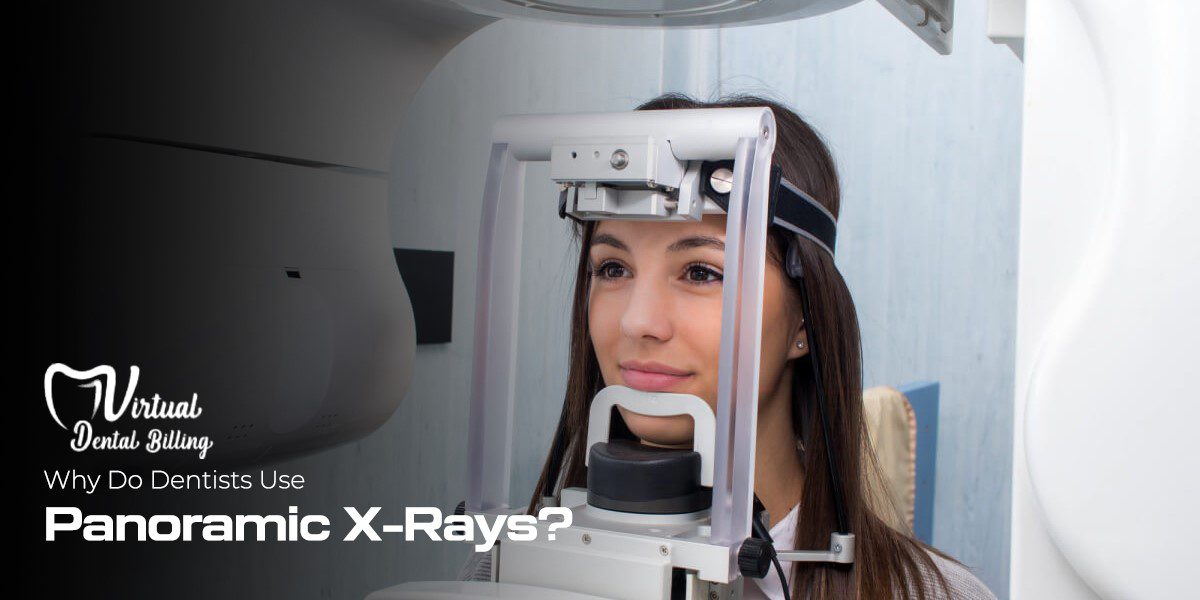
Why Do Dentists Use Panoramic X-Rays?
Dentists use panoramic X-rays when they need one wide view of the mouth, jaws, and nearby bone. This image helps with diagnosis, treatment planning, and claim support. For D0330, the image should match a clear reason in the chart, because payers often look for clinical need before they process the claim.
This scan gives more area than a small intraoral X-ray. For example, it shows both jaws, tooth position, bone shape, and sinus area in one 2D image.
Dentists often use a panoramic X-ray for these cases:
- New patient exams
The dentist gets a broad view before planning care. This helps show missing teeth, tooth position, and bone patterns. - Wisdom tooth checks
The image shows impacted teeth and their link to nearby bone. This helps the dentist plan removal or monitoring. - Orthodontic planning
The dentist or orthodontist reviews tooth position and jaw growth. This supports braces or aligner planning. - Implant planning
The image shows bone height and missing tooth spaces. The dentist still needs more detailed imaging in some implant cases. - Denture or partial planning
The scan shows the jaw ridge and tooth spaces. This helps the office plan full or partial dentures. - Trauma review
The dentist checks the jaw and tooth area after an injury. This helps identify broad bone or tooth position concerns.
Impacted tooth: This means a tooth does not fully come through the gum or bone.
TMJ: This means the jaw joint that connects the lower jaw to the skull.
Sinus area: This means the air-filled space near the upper jaw and nose.
For billing, the key point stays simple. The dental code for panoramic X-ray should connect to the diagnosis or treatment plan.
For instance, “routine X-ray” does not explain enough. Better chart notes mention wisdom tooth review, orthodontic records, implant planning, trauma, or another clear reason.
This matters because the D0330 dental code description does not mean every new patient needs the image. The code only tells what image the office took. The chart note explains why the image made sense.
What Does a D0330 Panoramic X-Ray Show?
Dental Code D0330 panoramic X-rays show the full mouth in one wide image. The dentist reviews all teeth, both jaws, jaw joints, sinus areas, tooth eruption, missing teeth, impacted teeth, and visible bone changes. This image helps with big-picture diagnosis, not small cavity checks between teeth.
Full-Mouth View in One Image
A D0330 panoramic X-ray gives the dentist one broad view of the mouth. It shows the upper jaw, lower jaw, erupted teeth, unerupted teeth, and nearby bone in one scan.
This matters because some problems sit outside the small areas that bitewing X-rays show. For example, wisdom teeth often sit deep in the jaw, so the dentist needs a wider image to review their position.
Structures Dentists Review on a D0330 Image
Dental Code D0330 helps the dentist study several areas at one time. Each area gives a different clue about the patient’s oral health.
- Upper and lower teeth
The dentist reviews tooth count, tooth position, and eruption pattern. - Jawbone shape
The dentist checks bone height, bone pattern, and unusual changes. - Wisdom teeth
The image shows the third molar angle, depth, and root growth. - TMJ areas
TMJ means temporomandibular joint, the joint that connects the lower jaw to the skull. - Maxillary sinus areas
Maxillary sinus means the air space above the upper back teeth. - Missing or extra teeth
The image helps find teeth that never formed, failed to erupt, or formed outside the normal pattern. - Jaw lesions or cyst-like changes
The dentist looks for unusual dark or light areas in the jawbone.
What D0330 Does Not Show Well
Dental Code D0330 panoramic X-rays give a wide view, yet they do not replace close-up dental X-rays. Bitewings still help dentists review cavities between back teeth, bone levels near crowns, and small contact areas.
This difference matters for billing. D0330 reports one panoramic radiographic image, while bitewing codes report smaller intraoral images with a different clinical purpose.
Quick Checklist: What to Look for in the Image Note
The clinical note should connect the D0330 image to the dentist’s findings. Weak notes create claim risk because the payer sees the code but not the reason.
Use this checklist after the dentist reviews the image:
- Tooth count recorded.
- Wisdom teeth position noted.
- Impacted teeth identified by tooth number.
- Jawbone changes are described.
- Sinus or TMJ concern noted when relevant.
- Missing or extra teeth recorded.
- Pathology review documented.
- No abnormal findings were recorded when the image looked normal.
Step-by-Step Reading Flow for Dental Teams
- Start with the reason for the scan.
The team should match the image review to the clinical concern, such as wisdom teeth, trauma, orthodontics, or surgery planning. - Review the full mouth first.
The dentist should look at both jaws, tooth count, and eruption pattern before focusing on one tooth. - Check impacted or missing teeth next.
The note should name the tooth number and describe the position. - Review bone and nearby structures.
The dentist should note jawbone changes, sinus findings, TMJ areas, or visible lesions. - Write the finding in simple terms.
The claim has stronger support when the chart explains what the panoramic X-ray showed.
Simple Takeaway
Dental Code D0330 shows the big picture. The image helps dentists review teeth, jaws, wisdom teeth, eruption, trauma, and visible bone changes, while smaller X-rays still serve close-up needs.
How Does D0330 Compare With Other Dental X-Ray Codes?
Dental Code D0330 panoramic X-rays differ from bitewings, periapical X-rays, and D0210 full mouth series because each code reports a different image type. D0330 gives one wide extraoral view, while other X-ray codes focus on smaller areas or multiple intraoral images.
D0330 vs D0210 vs Bitewings vs Periapical X-Rays
Dental teams often mix up D0330 and D0210 during claim entry. That mistake creates denial risk because payers expect the code to match the image type and clinical reason.
| Code | Image Type | Main Purpose | Common Billing Risk |
|---|---|---|---|
| D0330 | Panoramic radiographic image | Full-mouth and jaw view in one image | Billed without a clear clinical reason |
| D0210 | Full mouth series | Multiple intraoral images for tooth-by-tooth review | Billed when the team took a pano plus bitewings |
| D0272 | Two bitewing images | Check back teeth and bone levels | Billed with D0330 when payer rules limit payment |
| D0274 | Four bitewing images | Check more posterior contacts and bone levels | Payer denies as inclusive with another image |
| D0220 | First periapical image | Close-up view of one tooth area | Wrong code used for a wider diagnostic need |
| D0230 | Extra periapical image | Extra close-up tooth views | Missing tooth number or reason in the chart |
Why D0330 and D0210 Should Not Be Swapped
D0330 and D0210 do not mean the same thing. Dental Code D0330 reports one panoramic X-ray, while D0210 reports a full mouth series of intraoral images.
This difference matters because a panoramic image gives a wide view, while D0210 gives more close-up detail. The claim should reflect the image the practice took that day.
Billing Example: Right Code vs Wrong Code
Take this case: the dentist orders one panoramic X-ray to review impacted wisdom teeth #17 and #32. The team should report Dental Code D0330 because the image shows one wide view of the jaws and third molars.
Now take a second case: the dentist orders several intraoral films to review decay, bone levels, and tooth-by-tooth detail. The team should report D0210 if the image set meets the payer’s full mouth series requirements.
Quick Checklist: Pick the Right X-Ray Code
Use this checklist before claim entry:
- One wide extraoral image means D0330.
- Multiple intraoral images may point to D0210.
- Bitewing images need bitewing codes, such as D0272 or D0274.
- Periapical images need periapical codes, such as D0220 or D0230.
- The clinical note should explain the image reason.
- The image type should match the submitted code.
- The payer policy should guide frequency and bundling review.
Step-by-Step Guide to Avoid Code Mix-Ups
- Identify the image type first.
The team should confirm whether the image came from outside the mouth or inside the mouth. - Match the code to the image.
Dental Code D0330 panoramic X-rays need D0330, while intraoral image sets need their own CDT codes. - Review the clinical purpose.
The chart should show why the dentist needed that image, such as wisdom teeth, trauma, pathology, or close-up decay review. - Check payer bundling rules.
Some plans reduce or deny payment when teams bill a pano and bitewings on the same date. - Submit the claim with clean notes.
The billing team should send the code that matches the image, note, and payer rule.

Why Does Insurance Deny Dental Code D0330?
Payers deny Dental Code D0330 when the claim lacks a clear reason, the plan has frequency limits, or the code doesn’t match the image taken. Most denials start when the chart says “new patient pano” instead of naming the clinical need behind the panoramic X-ray.
Common Reasons D0330 Claims Get Denied
Dental Code D0330 needs a real reason in the patient record. Payers want to see why the dentist needed the full-mouth view.
- Missing clinical reason
The note doesn’t explain why the dentist ordered the panoramic X-ray. - Frequency limit issue
Some plans cover panoramic X-rays once every 3 to 5 years, depending on plan rules. - Wrong code selection
The team bills D0210, even though the office took one panoramic image. - Weak chart note
The note says “routine pano” without tooth numbers, findings, or treatment need. - Same-day image conflict
Some payers review D0330 with bitewings when both appear on the same claim. - No image finding recorded.
The dentist orders the image but doesn’t record what the image shows.
Weak Note vs Strong Note
Weak notes create questions. Strong notes tell the payer why the image mattered.
| Note Type | Example | Claim Risk |
|---|---|---|
| Weak note | New patient pano taken | High risk because the reason sounds routine |
| Better note | Pano ordered for wisdom teeth review | Lower risk because the clinical reason is clearer |
| Strong note | Pano ordered to evaluate impacted #17 and #32 prior to oral surgery referral | Strong support because tooth numbers and clinical purpose are clearly documented |
Quick Checklist: Reduce D0330 Denial Risk
Use this checklist before the claim leaves the office:
- The dentist ordered the panoramic X-ray after an exam.
- The chart names the clinical reason.
- The note includes tooth numbers when needed.
- The image finding appears in the record.
- The claim uses D0330 for one panoramic image.
- The team checked the plan frequency rules.
- The team reviewed the same-day bitewing rules.
- The patient received cost details when coverage looked limited.
Step-by-Step Guide Before Submitting D0330
- Check the exam note first.
The note should show the reason for the panoramic X-ray before billing starts. - Confirm the image type.
The billing team should verify that the office took one panoramic radiographic image. - Review the patient’s X-ray history.
The team should check whether the patient had a recent panoramic X-ray at another office. - Match the diagnosis needed to the code.
The note should connect D0330 to wisdom teeth, trauma, growth, surgery, orthodontics, or pathology review. - Send the claim with clean support.
The claim works better when the code, image, note, and payer rule match.
What Should Dental Teams Check Before Sending D0330 Claims?
Dental teams should check the clinical note, image type, payer frequency rule, and same-day coding before sending Dental Code D0330 claims. This pre-submit review helps catch weak notes, wrong codes, and plan limits before they turn into delays or denials.
Pre-Claim Review Checklist
Before submission, review these points:
- Clinical need
The chart should explain why the dentist needed a panoramic X-ray. - Image match
The image taken should match Dental Code D0330. - Payer rule
The team should verify frequency limits and same-day image rules. - Chart detail
The note should include findings, tooth numbers, or the treatment plan link. - Patient communication
The team should explain the out-of-pocket risk when the plan limit looks tight.
Best Documentation Example
Strong documentation sounds specific and simple.
“Patient reports pressure near lower third molars. Clinical exam shows partial eruption of #17 and #32. Dentist ordered Dental Code D0330 panoramic X-ray to review impaction angle and nerve space before oral surgery referral. The image shows mesioangular #17 and horizontal #32. Referral discussed.”
This note works because it includes the complaint, clinical finding, code reason, image result, and next step.
Dental Code D0330 FAQs
What is Dental Code D0330?
Dental Code D0330 means one panoramic radiographic image. Dentists use it for a full-mouth view that shows teeth, jaws, jaw joints, sinus areas, and nearby bone. It differs from bitewings because it gives a wide view instead of a close-up view of the teeth.
What does a panoramic dental X-ray show?
A panoramic dental X-ray shows both jaws, all teeth, wisdom teeth, eruption patterns, TMJ areas, sinus areas, and visible jawbone changes. Dentists use it when one broad image gives better diagnostic value than small intraoral images.
Is D0330 the same as D0210?
No, D0330 and D0210 report different image types. D0330 reports one panoramic X-ray taken from outside the mouth. D0210 reports a full mouth series made from multiple intraoral images. Billing one code for the other creates claim risk.
How often does insurance cover panoramic X-rays?
Many dental plans set frequency limits for panoramic X-rays, often once every 3 to 5 years. Plan rules vary, so the billing team should verify eligibility before the appointment. New trauma, pathology, or surgery planning may need extra documentation.
Why would a dentist order a panoramic X-ray?
Dentists order a panoramic X-ray to review wisdom teeth, jaw growth, missing teeth, trauma, surgery needs, orthodontic concerns, or visible pathology. The image helps when the dentist needs a full-mouth view instead of a small tooth-level image.
Final Wrap: Dental Code D0330 Made Simple
Dental Code D0330 works best when the panoramic X-ray has a clear clinical reason. The code should match one wide extraoral image, and the note should explain why the dentist needed that full-mouth view.
Clean D0330 billing starts before claim entry. The dentist should document the reason, the finding, and the next step, while the billing team checks payer rules, image history, and code accuracy.
For dental practices, this one code affects more than one X-ray charge. Strong D0330 documentation helps reduce denials, protect revenue, and keep the claim record clean.
If D0330 claims keep coming back unpaid, Virtual Dental Billing helps dental teams review coding, documentation, insurance rules, and denial patterns before revenue gets stuck.