
Patient treatment goes perfectly. Extraction stays smooth. Graft material gets placed correctly. Clinical notes look complete. Yet two weeks later, insurance rejected the claim because the wrong bone graft dental code was submitted.
Situations like this happen daily in dental practices.
Many offices lose reimbursement not because treatment failed, but because coding, documentation, or billing workflows create confusion during insurance review. One incorrect CDT code for bone graft procedures often triggers delays, downgrades, or full denials even when the clinical work remains accurate.
Bone graft billing also creates challenges because insurance carriers separate graft procedures into multiple categories. Some codes apply to fresh extraction sites, while others apply to retained natural teeth, implant placement, ridge augmentation, or sinus elevation procedures. Consequently, small coding mistakes quickly create major reimbursement problems.
For example:
- Using the D4263 dental code for extraction sites creates denials
- reporting D7953 dental code incorrectly affects socket preservation reimbursement
- Confusing the D6104 dental code with ridge preservation procedures delays implant-related claims
- Missing membrane documentation weakens claim approval support
Insurance reviewers also examine clinical documentation closely before approving graft-related procedures. Due to this, practices should connect radiographs, narratives, graft material type, and treatment timing clearly inside every submission.
Successful claim approval depends on more than selecting the right code. Reviewers also expect:
- procedure-specific narratives
- clear extraction documentation
- graft material details
- radiographic support
- implant timing clarification
- accurate surgical notes
Many growing practices strengthen reimbursement accuracy through organized billing systems and professional Dental Insurance Billing Services designed around coding review, attachment management, and denial prevention workflows.
Throughout this guide, we’ll break down:
- when to use each bone graft CDT code
- How insurance companies review graft claims
- Common Billing Mistakes That Trigger Denials
- documentation checklists for faster approvals
- Practical workflows dental teams use to reduce reimbursement delays
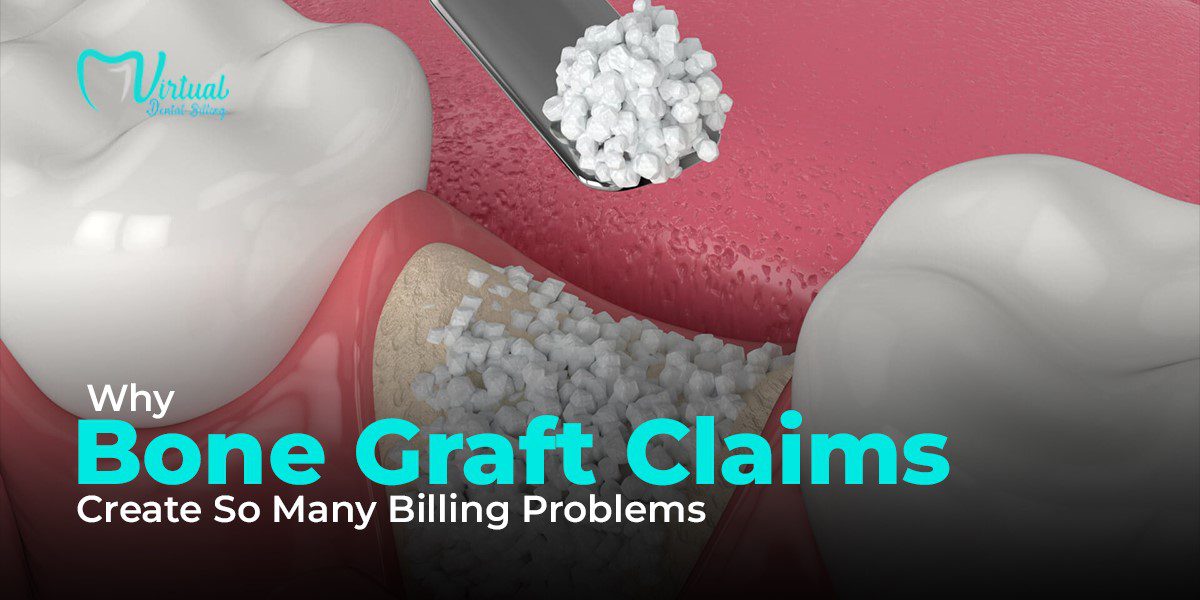
Why Bone Graft Claims Create So Many Billing Problems
Bone graft procedures create billing confusion because insurance companies classify grafting differently based on surgical timing, tooth condition, implant placement, and treatment purpose. Many claims fail review even when clinical treatment is completely correct. Consequently, practices lose valuable reimbursement due to small coding and documentation mistakes.
One office may place graft material after an extraction to preserve ridge width for a future implant. Another practice may place grafting during implant surgery itself. Meanwhile, some periodontal cases involve regenerative grafting around retained teeth. Although these procedures sound similar clinically, insurance carriers review each situation under separate coding rules.
This is where many denials begin.
For example:
- The socket preservation code applies differently from implant-related grafting
- D7953 ADA code supports healing before future restoration
- D6104 dental code description applies when grafting happens during implant placement
- D4263 dental code description relates to grafting around retained natural teeth during periodontal procedures
Using the wrong procedure classification often triggers manual review immediately.
Insurance carriers also examine treatment intent carefully before approving reimbursement. Reviewers want clear answers to questions like:
- Was grafting completed after extraction or during implant surgery?
- Did the site remain edentulous before treatment?
- Was the tooth still present during the procedure?
- Did the provider document graft material properly?
- Does radiographic evidence support surgical necessity?
Without those details, claims frequently enter pending review status.
Small Documentation Gaps Create Large Payment Delays
Many offices complete the surgical procedure correctly but fail to document:
- graft material type
- membrane placement
- extraction findings
- future implant planning
- ridge collapse prevention
- radiographic support
Simple phrases like “graft placed” rarely support reimbursement strongly enough during insurance review.
Instead, carriers expect detailed clinical explanations connected directly with the submitted bone graft CDT code and supporting records.
Common Situations That Create Coding Confusion
| Clinical Scenario | Commonly Used Procedure Direction |
|---|---|
| Ridge preservation after extraction | D7953 dental code |
| Grafting during implant surgery | D6104 |
| Regenerative graft around a retained tooth | D4263 |
| Lateral sinus elevation | D7951 dental code |
| Vertical sinus augmentation | D7952 dental code |
Small coding differences affect reimbursement outcomes significantly because payers separate graft procedures based on surgical purpose and timing.
At Virtual Dental Billing, our team helps dental offices reduce reimbursement delays through structured coding review, attachment verification, insurance communication, and claim monitoring systems built specifically for implant and graft-related procedures.
Many practices also improve approval accuracy through professional Dental Insurance Billing Services because organized documentation review and cleaner submissions reduce preventable denials before claims reach insurance companies.
Quick Bone Graft CDT Code Reference Guide
Selecting the correct graft procedure code matters because insurance carriers review surgical timing, treatment purpose, and site condition separately during claim evaluation. One small coding mismatch often delays reimbursement even when treatment remains clinically accurate.
This quick guide simplifies the most commonly used bone graft dental codes so billing teams identify the right procedure direction faster.
| CDT Code | When To Use | Common Billing Situation |
|---|---|---|
| D7953 dental code | Ridge preservation after extraction | Fresh socket healing before future implant placement |
| D6104 dental code | Grafting during implant surgery | Bone graft placed at the same appointment as the implant |
| D4263 dental code | Grafting around a retained natural tooth | Periodontal regenerative procedure |
| D4264 | Additional graft site in the same quadrant | Multiple retained tooth graft sites |
| D7950 dental code | Ridge augmentation in the edentulous area | Bone width or height correction before implants |
| D7951 dental code | Lateral sinus augmentation | Severe maxillary bone loss requiring lateral access |
| D7952 dental code | Vertical sinus elevation | Crestal approach with limited sinus elevation |
| D6103 dental code | Repair around existing implant defect | Peri-implant bone loss management |
Small Coding Differences Change Claim Outcomes
Many practices accidentally confuse:
- socket preservation dental code
- bone graft with implant placement code
- sinus augmentation dental code
Yet insurance carriers classify each procedure differently because surgical intent changes reimbursement guidelines.
For example:
- ADA code 7953 applies when extraction occurs first, and healing happens before implant placement
- D6104 dental code description supports grafting completed during implant surgery itself
- D7951 and D7952 dental codes apply specifically to sinus elevation procedures, not standard ridge preservation
Reviewers also expect supporting documentation connected directly with the submitted procedure code. Due to this, clinical notes, radiographs, narratives, and graft material details should align clearly before claim submission.
When To Use D7953 Dental Code Correctly
Many reimbursement problems begin when practices use the D7953 dental code incorrectly after extractions. Insurance carriers review this procedure carefully because ridge preservation claims often require clear proof showing future site maintenance before implant placement.
D7953 ADA code applies when graft material is placed into a fresh extraction socket to preserve the ridge structure during healing. Most offices use this procedure when patients plan future implants, bridges, or prosthetic treatment later.
Timing matters here.
This procedure supports healing after extraction, not simultaneous implant placement. Consequently, reviewers often deny claims when practices are confusing:
- bone graft at the time of extraction code
- bone graft with implant placement code
- socket preservation code
Simple Clinical Example
The patient presents with a fractured molar requiring extraction. The provider removes the tooth and places xenograft material into the fresh socket to maintain bone width for possible implant treatment later.
Correct procedure direction:
– D7953 dental code
Wrong procedure direction:
– D6104 dental code
Why?
Because implant placement does not occur during the same surgical visit.
Documentation Review Checklist For D7953
Insurance reviewers usually expect:
| Required Documentation | Why It Matters |
|---|---|
| Extraction details | Confirms fresh socket treatment |
| Graft material type | Supports surgical necessity |
| Radiographic evidence | Validates site condition |
| Future restorative plan | Explains the purpose of ridge preservation |
| Clinical narrative | Connects diagnosis with treatment |
| Site-specific documentation | Prevents generalized submissions |
Missing one detail often slows reimbursement significantly.
Common Mistakes That Trigger Denials
Many offices lose reimbursement because documentation stays incomplete or coding direction becomes unclear.
Frequent problems include:
- using D4263 dental code for extraction sites
- missing graft material details
- unclear implant timing documentation
- incomplete narratives
- no radiographic support
- incorrect socket preservation wording
Reviewers also examine whether healing occurs before future restoration. Due to this, treatment notes should explain delayed implant planning clearly.
Many growing practices reduce these submission errors through organized Dental Insurance Verification because benefit reviews often identify graft limitations, missing tooth clauses, and implant-related exclusions before treatment begins.
D7953 vs D6104: Difference Many Practices Confuse
Many claim denials happen because offices use D7953 dental code and D6104 dental code interchangeably even though both procedures represent completely different surgical timing.
This confusion usually starts during implant planning.
One procedure supports ridge preservation after extraction. Meanwhile, the other supports graft placement during implant surgery itself. Insurance reviewers separate both situations carefully during claim review. Consequently, incorrect coding often triggers denials, downgrades, or requests for additional documentation.
Quick Comparison Guide
| Procedure | Correct Use Scenario | Common Mistake |
|---|---|---|
| D7953 dental code | Graft placed after extraction with healing before future implant | Used incorrectly during same-day implant placement |
| D6104 dental code | Bone graft placed during implant surgery | Used incorrectly for fresh extraction socket preservation |
Simple Billing Example
Situation 1
Tooth gets extracted today. The provider places graft material to preserve ridge width. Implant placement was planned several months later.
Correct direction:
- socket preservation dental code using ADA code 7953
Situation 2
Implant gets placed during surgery. The provider notices buccal defects and places graft material around implant threads immediately.
Correct direction:
- D6104 dental code description
Small timing differences completely change coding direction.

Why Insurance Reviewers Flag These Claims
Reviewers usually compare:
- treatment date
- extraction timing
- implant placement timing
- radiographs
- narratives
- surgical notes
If documentation suggests delayed healing but claim uses implant-related graft coding, reimbursement problems begin quickly.
Many practices also submit short narratives like:
“Bone graft completed.”
This wording creates weak claim support because reviewers cannot determine:
- surgical purpose
- timing sequence
- future restorative planning
- implant relationship
Clear explanations improve approval potential significantly.
Simple Workflow To Prevent Coding Errors
Before claim submission, billing teams should confirm:
- Was the implant placed on the same day?
- Did extraction occur first?
- Does healing happen before restoration?
- Do narratives explain treatment timing clearly?
- Do radiographs support procedure selection?
Structured review systems reduce coding confusion before claims reach insurance carriers.
At Virtual Dental Billing, our team helps dental practices improve reimbursement accuracy through organized coding review, claim monitoring, narrative analysis, and payer-focused billing workflows designed specifically for complex implant and graft-related procedures.
Even small documentation improvements often reduce delays, strengthen approvals, and improve long-term collection consistency for surgical cases involving grafting and implant therapy.