
Many insurance companies refuse payment because the patient still falls under a waiting period. Front desk staff rechecks benefits again and again. And the billing team spends hours calling the payer. Meanwhile, the patient receives an unexpected balance and starts questioning the office.
Situations like this create stress inside dental practices every single day.
Most claim denials do not happen because the treatment was wrong. Denials happen because small details get missed during the dental insurance eligibility verification process. Busy schedules, manual checks, outdated portals, incomplete patient information, and rushed workflows often lead to verification mistakes. One missed detail creates a chain reaction.
Front desk teams lose time fixing rejected claims. Billing departments struggle with delayed reimbursements. Patients lose trust after surprise bills appear. Practice cash flow slows down because incomplete dental insurance verification allows preventable errors to slip through. This is where Virtual Dental Billing helps dental practices work differently.
Instead of checking only active coverage, our team reviews the complete dental insurance verification process carefully before treatment begins. We verify deductibles, annual maximums, frequency limitations, missing tooth clauses, downgrades, waiting periods, and procedure eligibility step by step.
Because of this process, dental offices reduce billing confusion before claims ever reach the insurance company. Clean verification creates cleaner claims. Better estimates improve patient communication. Faster claim approvals help practices maintain steady revenue without constant rework.
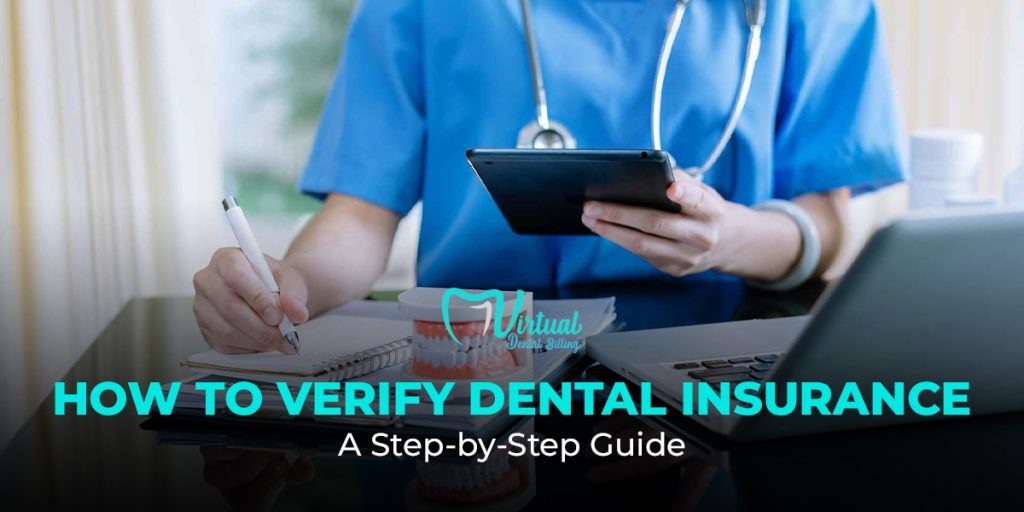
This guide explains how to verify dental insurance step by step so your office avoids common verification mistakes, reduces denials, and improves billing accuracy with a smoother workflow.
Information Dental Offices Need Before Checking Insurance Coverage
Insurance calls become frustrating fast when front desk teams collect incomplete patient details. Representative asks for subscriber information. Staff search manually through charts. Hold time increases. The appointment schedule slows down. Small delays like these waste hours across the week.
Due to this, organized preparation matters before starting the dental insurance verification checklist.
Most insurance carriers request the same core details during every eligibility check. Missing even one detail often stops the process completely. Therefore, dental offices need structured intake systems before patient appointments get confirmed.
Front desk teams usually collect:
- patient’s full name
- date of birth
- subscriber name
- insurance ID number
- group number
- employer information
- insurance company phone number
- relationship to subscriber
Yet experienced billing teams collect more than basic demographics.
For example, a patient changes employers three months earlier but still presents the old insurance card during check-in. Front desk staff copies outdated information into practice software. Claim later routes toward the terminated plan instead of active coverage. Payment delay begins before treatment even starts.
Clean verify patient dental insurance workflows prevent these mistakes because staff members confirm recent employment changes and updated policy status during scheduling calls.
Treatment details also matter early in the process. Insurance representatives often provide different benefit information depending on planned procedures. Crown coverage differs from preventive services. Periodontal benefits differ from restorative treatment. So, staff members should review scheduled procedures before contacting payer support.
Well-prepared offices also document prior treatment history when possible. Replacement rules, frequency limitations, and history-based exclusions frequently affect reimbursement decisions. Consequently, accurate records help teams build cleaner financial estimates before patient arrival.
Strong preparation supports faster workflows for checking dental insurance coverage because organized information reduces back-and-forth communication during verification calls.
Step-by-Step Process to Confirm Patient Insurance Benefits
Strong verification starts long before claim submission. Front desk teams need clear systems because rushed checks often create expensive billing problems later. Therefore, organized workflows help dental practices avoid confusion before treatment begins.

Step 1: Confirm Active Policy Status
First, staff members confirm the policy activation date and termination date. Many patients assume insurance still works because old cards remain inside wallets for years. Yet employer changes, missed premiums, or job transitions often terminate coverage quietly.
For instance, the patient scheduled a deep cleaning after switching employers recently. Old insurance appears valid inside the practice software. The insurance carrier later reports inactive policy status during claim review. The office now faces delayed collections and patient frustration.
Clean dental insurance eligibility check procedures stop these situations early because teams verify live policy status directly through payer portals or insurance representatives.
Step 2: Review Deductibles and Remaining Maximums
Next, staff members check remaining deductible balances and annual maximum amounts. These numbers directly affect patient responsibility.
Suppose the patient needs crown treatment worth $1,400. The insurance plan includes a $1,500 annual maximum, yet the patient had already used $1,200 earlier during the same year. The remaining benefit only covers a small portion of the treatment cost. Due to this, accurate estimates become critical before appointment day.
Step 3: Check Procedure Limitations and Waiting Periods
Insurance carriers place restrictions on many restorative procedures. Frequency limitations often apply to crowns, periodontal treatment, scaling, fluoride, and radiographs. Waiting periods also affect newer policies.
Strong dental insurance verification before appointment workflows reduce unexpected denials because teams review these restrictions before treatment scheduling gets finalized.
Step 4: Document Every Verification Detail
Documentation protects dental offices later. Staff members should record:
- representative name
- call reference number
- verification date
- benefit breakdown
- exclusions discussed
- remaining benefits
Without proper notes, billing teams struggle during appeals and payment disputes.
Many growing practices now outsource this process through professional dental billing and insurance verification services because verification consumes large amounts of front desk time daily. Teams at Virtual Dental Billing help dental offices manage eligibility checks, benefit reviews, and insurance breakdowns before patient treatment begins.
Common Insurance Verification Mistakes That Lead to Claim Denials
Many claim denials begin before billing teams submit claims. Front desk errors during insurance checks often create payment problems weeks later. Due to this, small verification mistakes quietly affect collections, scheduling, and patient trust across the entire practice.
Incorrect subscriber details create one of the most common problems. The patient provides an old insurance card during check-in. Staff copies outdated member ID into practice software. The insurance carrier later rejects the claim because the policy had already changed under the new employer coverage.
Frequency limitations also trigger denials regularly. Many insurance plans restrict procedures within fixed time periods. Crowns, bitewings, periodontal maintenance, fluoride treatments, and panoramic X-rays often carry timing limitations.
For example, the patient received periodontal maintenance after changing dental offices recently. The previous office completed the same procedure three months earlier. The front desk team skips the treatment history review during verification. The insurance company denies reimbursement afterward because the policy covers periodontal maintenance every four to six months, depending on plan terms.
Waiting periods create another costly issue. Some restorative services require active enrollment for six to twelve months before coverage begins. Yet rushed scheduling processes often miss policy effective dates completely.
Incomplete documentation causes problems later as well. Staff members speak with insurance representatives but fail to record reference numbers or benefit breakdown details. Billing teams then struggle during appeals because verification notes remain unclear.
Coordination of benefits mistakes frequently delay reimbursement, too. Patients carry dual coverage through spouse and employer plans. Incorrect primary payer submission slows processing across both insurance carriers.
Strong dental claim denial prevention workflows reduce these issues because organized verification creates cleaner billing from the beginning.
Many dental offices now review denial trends monthly to identify repeating verification mistakes early. Teams at Virtual Dental Billing also help practices reduce billing errors through structured eligibility checks and insurance breakdown processes before treatment starts.
Dental offices looking for deeper denial prevention strategies should also review 5 Common Dental Claim Denial Reasons and How to Stop Them because verification errors often connect directly with claim rejection patterns inside growing practices.
Better Insurance Verification Leads to Better Financial Decisions
Dental offices make financial decisions every single day. Schedule gaps, treatment acceptance, production goals, staffing pressure, and collections all connect directly with insurance accuracy. Due to this, verification affects much more than eligibility checking.
Front desk teams often build treatment estimates using incomplete insurance details. Later, reimbursement arrives lower than expected because annual maximums have already reached the limit or downgrade clauses reduced coverage. Practice then adjusts balances manually while patients question billing accuracy.
Clean verify dental insurance benefits workflows help offices make stronger financial decisions before treatment begins.
For example, a patient schedules a full restorative treatment worth several thousand dollars. Insurance review shows the remaining annual maximum only covers a small portion of planned procedures. The front desk team discusses phased treatment scheduling instead of completing everything during the same benefit period. Patient avoids unexpected balance shock, while practice creates realistic payment planning from the start.
Decision-making improves because accurate insurance data supports:
- cleaner treatment estimates
- smarter scheduling
- stronger collections
- fewer payment disputes
- Reduced rework inside billing departments
Many offices also struggle with delayed case acceptance because financial conversations feel uncertain. Patients hesitate when treatment coordinators sound unsure about insurance coverage. Yet clear benefit breakdowns help teams explain estimated costs confidently during consultations.
Strong dental insurance coverage check systems also protect production planning. Dentists may schedule high-value procedures expecting insurance reimbursement, but incorrect verification later affects collections and monthly revenue targets.
Growing dental practices no longer treat insurance verification like routine front desk work. Smart practices treat verification like revenue protection because one missed detail today often creates denied claims and delayed collections later.
At Virtual Dental Billing, we help dental offices verify coverage details before appointments so practices improve financial accuracy, reduce billing confusion, and create smoother patient experiences from the start.
We provide clear insurance breakdowns that help your team explain treatment costs with confidence. Patients understand expected balances earlier, while billing departments spend less time correcting preventable errors. We also support cleaner scheduling and treatment planning because accurate financial details are confirmed before procedures begin.