

Rising staff pay, lab fees, and supply costs put more pressure on dental practices. Yet many PPO plans still pay rates that fail to match the cost of care. In a late-2025 ADA poll, more than half of dentists named low insurance payments, delays, or denials as key concerns for 2026.
For this reason, PPO fee schedules 2026 need a closer review. Low dental PPO reimbursement rates increase write-offs and cut the income earned from each procedure. Small fee gaps also grow fast when they affect hundreds of claims.
Sending a payer a general request for higher fees rarely builds a strong case. Instead, you should support your PPO fee schedule negotiation with procedure volume, payer data, and clear target rates. The following three PPO negotiation strategies explain how to choose the right CDT codes, measure payer value, and respond when an insurance company rejects the first request.
Why PPO Fee Schedule Review Matters in 2026
PPO plans set a maximum allowable fee for each covered procedure. When this amount stays below your office fee, your practice writes off the difference. Therefore, low dental PPO reimbursement rates reduce income even when patient volume stays strong.
The ADA advises dentists to review contracted fees each year and report their full office fees on claims. Full-fee reporting gives payers accurate charge data when they assess market rates. Regular reviews also help you find outdated dental insurance fee schedules before they cause more dental practice write-offs.
Consider D1110 as an example. Suppose your practice completes 800 adult cleanings each year, and the payer raises its allowed fee from $86 to $95. This $9 increase adds $7,200 in yearly revenue without adding more appointments.
Still, one higher rate won’t fix every weak contract. You should compare procedure volume, current allowed fees, and office fees before starting a dental fee schedule analysis. This review shows which CDT codes create the largest revenue gaps and deserve attention first.
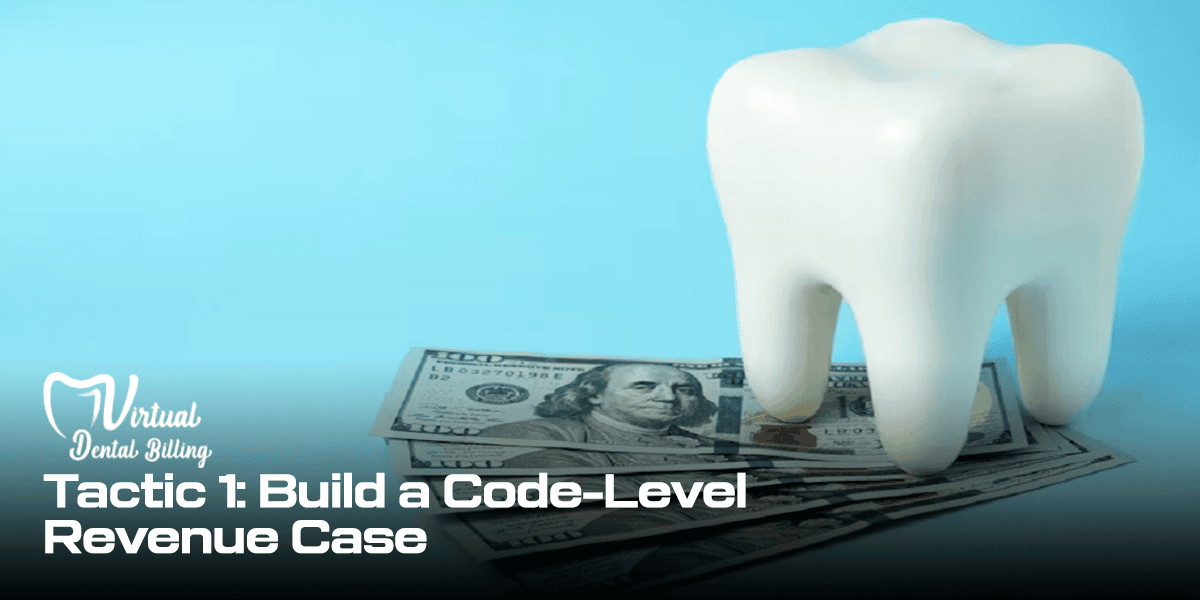
Tactic 1: Build a Code-Level Revenue Case
Strong PPO fee schedule negotiation starts with your own claim data. Payers need a clear reason to review their rates, so a broad request for “better fees” gives them little reason to act. Specific numbers create a stronger request.
First, pull the last 12 months of procedure data from your practice management system. Then record these details for each CDT code:
- Total number of completed procedures
- Current office fee
- PPO allowed fee
- Write-off per procedure
- Proposed reimbursement rate
- Expected yearly revenue increase
Next, compare your office fee schedule with the payer’s current rates. This comparison shows where the largest fee gaps occur. Your UCR dental fees also help you set fair target rates based on your services, costs, and local market.
Use this formula to measure each code:
Annual revenue gain = yearly procedure volume × proposed fee increase
Suppose your practice completes 300 crowns under D2740 each year. The payer currently allows $925, while your proposed rate reaches $1,025. Therefore, a $100 increase across 300 crowns adds $30,000 in yearly revenue.
This dental fee schedule analysis turns your request into a clear financial case. It also helps you spend time on codes with the greatest effect on collections.
Which Dental Codes Should You Negotiate First?
Choosing the right codes keeps your negotiation request clear and backed by revenue data. High fees alone don’t show financial value. Instead, you should measure how often your practice performs each procedure and how much revenue the current rate removes.
Start with codes from these groups:
- D0120, periodic oral evaluation: High patient volume makes small fee increases add up across the year.
- D1110, adult prophylaxis: Frequent use often creates a large total write-off, even when the fee gap looks small.
- D2392, two-surface posterior composite: Regular restorative work gives this code strong revenue weight.
- D2740, crown: Lower volume still produces a large loss when the allowed fee sits far below your office fee.
- D2950, core buildup: Payers often apply strict payment rules, so review both the rate and processing policy.
Next, rank each code by yearly revenue opportunity. For example, a $12 increase across 1,000 cleanings adds $12,000. By comparison, a $100 increase across 80 crowns adds $8,000.
This calculation shows why high-volume CDT codes often deserve attention before higher-priced procedures. Therefore, your dental PPO fee negotiation should request increases based on total yearly value, not the fee gap alone.
Tactic 2: Measure Payer and Network Value
Higher fees don’t always make a PPO contract profitable. One payer might offer better rates but bring few patients. Another payer might pay less yet support a large share of monthly visits. Therefore, your dental payer mix should guide each negotiation decision.
First, review the last 12 months of practice data. Then build a scorecard for every PPO using these points:
- Number of active patients
- Total yearly collections
- Production linked with the payer
- Contractual write-off rate
- Claim denial rate
- Average payment time
- Most common CDT codes
- Current network agreement
Next, calculate each payer’s share of insured patients:
Payer share = patients linked with the payer ÷ total insured patients × 100
Suppose one PPO covers 22% of your insured patients but creates 35% of total contractual write-offs. This gap shows why patient volume alone doesn’t prove contract value. Your team should review collections and write-offs together before requesting new rates.
Clear payer data strengthens your PPO negotiation strategies because it shows the business value your practice brings to the network. It also helps you rank contracts by revenue impact. Before contacting provider relations, though, check whether the payer holds a direct agreement or reaches your practice through a leased dental network.
Check Direct and Leased Network Access
The payer name on an EOB doesn’t always match the company that controls your contracted rate. Some insurance companies access dentists through leased dental networks or third-party agreements. As a result, your practice might receive a lower rate from a contract you rarely review.
Start by matching each payer with the agreement that supplied the fee schedule. Then check these records:
- Signed PPO contracts and later amendments
- Current fee schedules for each dentist
- EOBs from common CDT codes
- Network participation lists
- Provider portal records
- Emails from payer relations
Next, request a full list of networks linked with each contract. This step helps your team find overlapping PPO network agreements and confirm which company controls the applied fee. It also prevents your practice from negotiating with the wrong payer.
For instance, your office might hold a direct contract with one PPO while another carrier reaches the practice through the same network. Both carriers might apply different rates for D1110 or D2740. Therefore, compare paid claims with every contract before accepting a proposed schedule.
Clear network mapping strengthens your dental insurance contract review. Once you know who controls each rate, you should send the negotiation request to the right provider relations team.
Tactic 3: Counter the First Offer in Stages
Payers rarely approve every requested increase during the first review. Some offer a small change, while others keep the current rates. Therefore, your dental PPO contract negotiation needs more than one request.
Before contacting provider relations, set three rate levels for each priority code:
- Target rate: The amount supported by your fee data and yearly revenue review
- Acceptable rate: The lowest increase that gives your practice a useful financial result
- Fallback position: The next step if the payer rejects both rates
Next, send your code-level report with a short written request. Explain procedure volume, current reimbursement gaps, and proposed fees. Then ask the payer to review specific CDT codes instead of requesting one percentage increase across the full schedule.
If the payer rejects your target, request an alternate fee schedule. You should also ask whether another direct network contract offers better rates. This staged method keeps the discussion open without accepting the first offer too quickly.
Record every email, call, contact name, and proposed rate. In addition, request the effective date and final fee schedule in writing. Verbal promises give your billing team nothing to check later.
Strong payer contract negotiation ends with clear terms. Once the payer approves new rates, your team must confirm that the updated fees appear on future EOBs.
Build a Negotiation File Payers Won’t Ignore
Scattered reports weaken a strong fee request. Your negotiation file should place every number, contract term, and contact record in one clear order. This structure helps provider relations review your request without searching through unrelated data.
Include these records in your file:
- Current dental insurance fee schedule
- Full office fee schedule Build a Code-Level Revenue Case
- Signed contract and amendments
- Top CDT codes by yearly volume
- Current and proposed rates by code
- Contractual write-offs by payer
- Patient and collection share
- Direct and leased network details
- Previous negotiation emails
- Provider relations call log
Next, add a one-page rate comparison. List the current allowed fee, requested fee, yearly procedure count, and expected revenue difference for each priority code. This page gives the payer a quick view of your dental fee schedule analysis.
Keep contract terms close to the fee data. For instance, record renewal dates, request deadlines, network access clauses, and notice periods. Your dental insurance contract review should also confirm whether one agreement covers every provider and location.
Finally, save each payer’s records in a separate folder. Use clear file names with the payer, document type, and date. This simple system supports faster follow-up and protects your PPO fee schedule negotiation from missing records or conflicting rate details.