
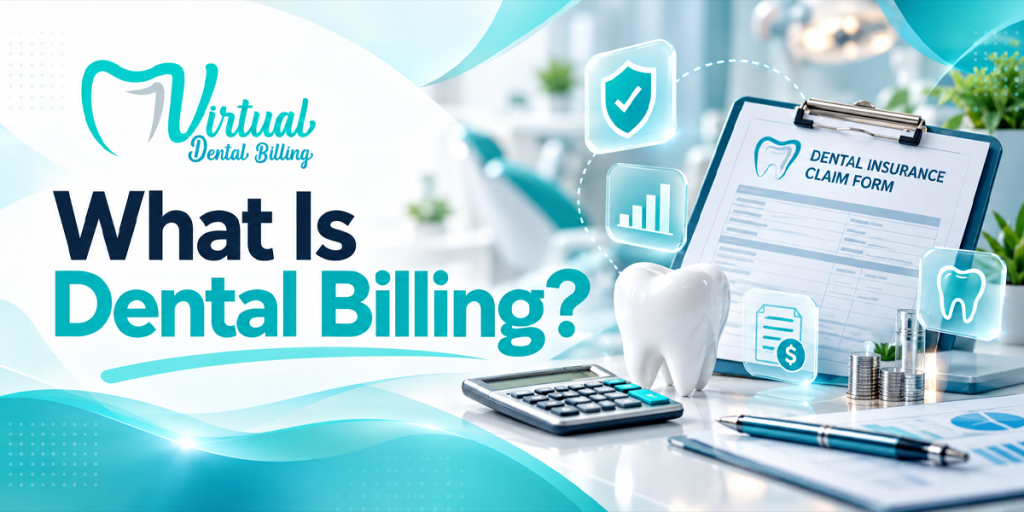
Dental billing is the office workflow for recording care, requesting payment from a dental plan when applicable, and tracking what has been paid or remains due. It links the treatment record to the insurer’s claim decision and the patient’s account. For people without insurance, the office still tracks charges and payments; no insurance claim is submitted.
During this workflow, staff check patient and plan details, document services, submit claims, post payments, and follow up on missing information or delayed responses. Clear records matter because mismatched treatment or patient details can slow claim review.
Billing and coding are related, but they have different roles. Each CDT code identifies a dental procedure; billing combines it with patient, provider, and service details to request benefits. The American Dental Association maintains the CDT code set for reporting dental procedures. However, a valid code alone does not guarantee payment. The plan applies its coverage rules when it reviews the claim.
In short, dental billing gives the practice a way to track care, payer decisions, and patient balances together.
Dental Billing vs. Dental Coding: What’s the Difference?
Dental billing and dental coding are connected jobs, but they answer different questions. Coding asks, “What service did the dentist provide?” Billing asks, “How is that service submitted and tracked for payment?” One accurate code is only part of a complete claim.
Dental coding matches the clinical record to a CDT procedure code. CDT codes standardize how dental services are documented and reported. The American Dental Association maintains the code set, and the treating dentist selects the code based on the care provided. Billing staff check that claim details align with the record; they should not guess at a code when documentation is unclear.
Dental billing uses the code as one part of a larger claim. Staff also check patient and plan details, include required provider and service information, submit the claim, then review the payer’s response. Next, they post insurance payments, investigate delays or denials, and identify any remaining patient balance.
For example, when a patient receives a cleaning, the code identifies the service in the record and claim. Billing combines that code with the relevant account and plan details to request benefits. The insurer still applies plan rules, so submitting a valid code does not promise payment.
In short, coding describes the service; billing manages the claim and payment steps around it. Related but not interchangeable, both need clear records and accurate information to prevent avoidable corrections.
How Does the Dental Billing Process Work?
The dental billing process follows a claim from the first coverage check through the final patient account. Each step relies on the one before it: current eligibility, clear treatment notes, complete claim details, careful payment posting, and follow-up. This order helps the office find errors sooner and explain what the plan paid. When each handoff is documented, staff can see whether to correct, resubmit, or appeal a claim.
1. Confirm Coverage Before Treatment
Before the appointment, confirm the patient’s name, member ID, payer, and effective date. Dental insurance verification can include network status, deductible, waiting period, frequency limits, annual maximum, and whether other dental coverage applies. Keep a note of when and how the check was done. Because plans may change eligibility retroactively, an earlier check may not match the patient’s status on the date of service. For costly or complex care, the office may request a predetermination; its estimate can guide expectations, but it does not guarantee payment.
2. Document Treatment and Confirm CDT Codes
Once care is delivered, the clinical record should describe the services actually performed. The treating dentist selects the appropriate CDT code based on that documentation; billing staff check that claim details match the record. Depending on the service and payer, a claim may need tooth or surface information, a narrative, or supporting images. Never guess a code or alter the clinical record to fit coverage. Clear notes help the payer understand what was done and why.
3. Prepare and Submit the Claim
For accurate dental claim submission, enter the correct patient, subscriber, provider, date of service, procedure, and fee details. The ADA Dental Claim Form provides a common format for reporting dental services, while many offices send claims electronically. Follow the payer’s instructions because missing fields or attachments can slow review. If a secondary plan is involved, include primary-plan payment information and the required EOB. Confirm that the claim was received, save its number or electronic acceptance message, and note the filing deadline so an unaccepted claim can be corrected promptly.
4. Review the Payer’s Decision
Once submitted, the plan reviews the claim under the patient’s benefits, network terms, and supporting documents. It may pay or adjust the requested amount, ask for more information, or deny the claim. Read the Explanation of Benefits (EOB) or electronic remittance carefully; allowed amounts, payment figures, adjustments, and remark codes help explain the decision and patient responsibility. Some payer responses request missing documents rather than making a final decision. Read the remark and follow its stated next step before calling the claim denied or filing an appeal. When a dental claim denial occurs, check the remark code and the plan’s appeal instructions. Send missing information or appeal within the stated deadline.
5. Post Payments and Reconcile the Account
Once the response arrives, compare it with the submitted claim, payer payment, and the practice’s contract terms. Post the payment and any contractual adjustment to the correct account, then investigate differences before billing the patient. The EOB explains how the payer processed the claim; it is not automatically the office’s bill. Clear EOB details should show plan limits and any balance due.
6. Follow Up and Close the Claim
Track open claims rather than assuming silence means they are complete. Correct errors, send requested records, or appeal within the payer’s timeframe. Once the payer gives its final response, explain the plan payment, adjustments, and remaining amount in plain language, based on the plan terms and office agreement. Document the conversation and next step so the account can be handled consistently. Together, these steps connect the care recorded in the chart with the claim outcome and the patient’s final account balance.
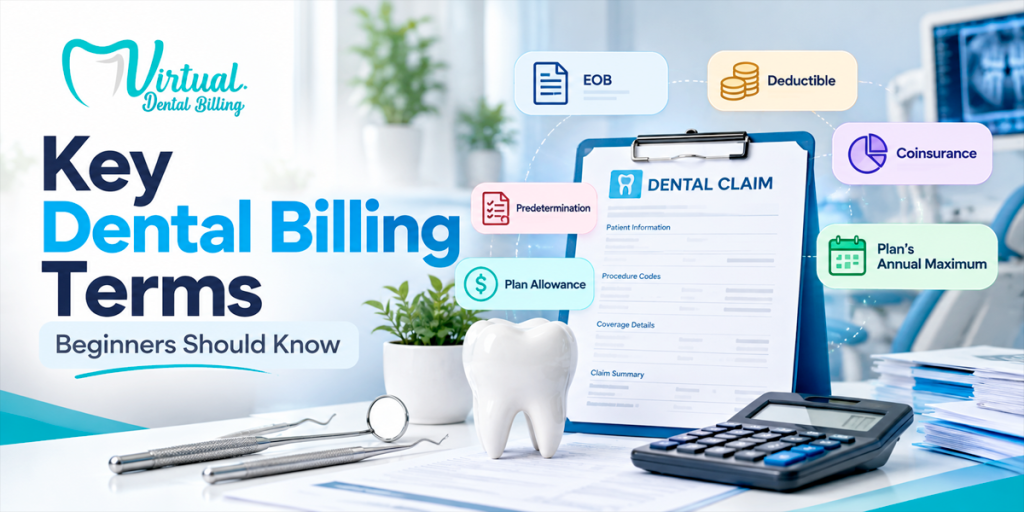
Key Dental Billing Terms Beginners Should Know
Knowing these dental billing terms helps staff read payer responses and explain patient balances. Plan benefits vary, so verify each patient’s details before relying on an estimate.
- Explanation of Benefits (EOB): The payer’s summary after it processes a claim, showing how services were reviewed, what the plan paid, and what the patient may owe. It explains the claim decision; it is not the dental office’s bill.
- Deductible: The amount a patient pays toward covered care before the plan pays benefits for services subject to the deductible. Some plans apply it differently across service types, so check the benefit details.
- Coinsurance: The patient’s percentage share of a covered service after the deductible is met. The plan and service determine the percentage, so a rate for one procedure may not apply to another.
- Plan’s annual maximum: The most a dental plan will pay toward covered care during its benefit year. Once the limit is reached, the plan may pay no further benefits for the year, depending on its terms.
- Predetermination: This is the plan’s estimate of potential benefits for proposed care. It reflects eligibility and remaining benefits at that time, so it does not guarantee payment when the claim is later submitted.
- Plan allowance (allowed amount): The amount the plan uses to calculate its benefit for a service. It may differ from the dentist’s full fee and affects how the plan payment and patient share are calculated.
Together, these terms help staff read payer responses, post payments accurately, and explain the final balance in plain language.
How One Dental Claim Moves Through Billing
Here’s a simplified dental billing example with fictional numbers. Coverage and payment rules vary by plan.
Suppose a patient has a filling. Before the visit, staff confirm current plan details and explain that verification is an estimate, not a promise of payment. Once treatment is complete, the dentist records the service and selects the appropriate CDT code. Billing staff add it to a dental insurance claim with patient, provider, service date, and fee details, then submit it to the plan.
For a simple calculation, assume the dentist’s fee is $200 and the plan’s allowed amount is $150. The $50 difference is a contractual adjustment. Suppose the filling is covered at 80% after a $25 deductible. That leaves $125 for coinsurance: the plan pays $100, and the patient pays the $25 deductible plus $25 coinsurance. Total payments equal the $150 allowed amount. The real patient share depends on eligibility, network terms, and plan limits.
The EOB shows how the plan processed the claim, including the allowed amount, payment, and patient responsibility. The office compares it with the submitted claim, posts the insurance payment and contractual adjustment, then confirms the patient balance. If a figure does not match, staff check the EOB remarks and account before billing the patient.
This example shows the roles clearly: coding identifies the service, while billing carries the claim through submission, payer review, payment posting, and patient follow-up.
Common Reasons Dental Claims Are Delayed or Denied
Dental claims can stall when information is incomplete, conflicts with the patient record, or fails to meet plan rules. Start by reading the payer’s explanation or remark code; it shows why payment is delayed or lower than expected.
- Missing or mismatched details: Incorrect member ID, provider number, date of service, tooth or surface detail, or procedure code can stop a claim from matching the visit record. Compare the claim with the chart and correct that field.
- Missing supporting records: Some services require a narrative, chart notes, images, or other documents. Send what the payer requests and make sure the records support the treatment provided.
- Code and documentation differences: The CDT code should reflect the service the dentist provided and documented. If the record does not support the submitted code, ask the treating dentist to review it before resubmitting.
- Eligibility or benefit limits: Benefits may be affected if coverage ended, a deductible still applies, a waiting period or frequency limit is in effect, or the plan’s annual maximum has been reached. Eligibility can change, so an earlier estimate may not match the date of service.
- Coordination or filing deadlines: Secondary plans may need the primary plan’s EOB before processing their share. Claims can also be delayed or denied if they miss the payer’s filing deadline.
Returned claims usually need corrected information or more records; denials may reflect how the plan applied its benefits. Payer labels can differ, so follow the reason shown on the EOB. For a dental claim denial, correct the issue and resubmit when allowed, or appeal with supporting records before the plan’s deadline. Keep a note of what was sent and when.
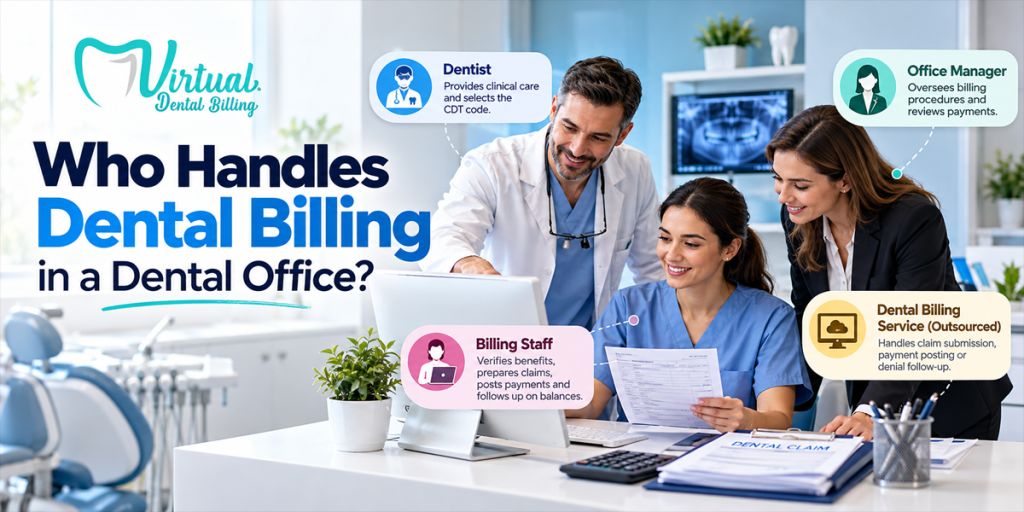
Who Handles Dental Billing in a Dental Office?
Responsibility for dental billing depends on practice size and staffing. In a small office, front-desk staff or an office manager may verify benefits, prepare claims, post payments, and follow up on open balances. Larger practices may assign these duties to a dental biller or dental billing specialist.
The dentist handles clinical care and the treatment record. The treating dentist selects the CDT code based on services provided, while billing staff uses it with patient, provider, plan, and visit details to submit the claim. Coding questions should go back to the dentist; billing staff should not guess at a code or change clinical notes to improve reimbursement.
Office managers oversee billing procedures, monitor outstanding claims, and review payment patterns. Some practices use an outside dental billing service for claim submission, payment posting, or denial follow-up. When work is outsourced, the dental team still needs to review reports, answer clinical questions, and keep patient communication clear.
These roles work together: the dentist documents care, billers manage the claim and payment process, and the practice follows the account through the payer’s decision and any patient balance.
FAQs About Dental Billing
These quick answers cover questions patients and new dental office staff often have about dental billing.
Is an EOB a bill?
No. An Explanation of Benefits (EOB) summarizes how an insurer processed a dental claim. It lists the services reviewed, the plan’s payment, adjustments, and any amount assigned to the patient. The dental office sends a separate statement for a balance it determines is due. Compare the EOB with the office account; the EOB itself is not an invoice.
Does dental insurance verification guarantee payment?
No. Dental insurance verification shows a patient’s eligibility and benefits at the time they are checked. Coverage and the remaining annual maximum can change before treatment or claim review. Predetermination gives an estimate of how the plan may handle proposed care, but it does not guarantee payment. The insurer applies the plan’s terms when it reviews the claim.
What is the difference between dental billing and coding?
Dental coding matches the treatment record to the appropriate CDT code. The treating dentist selects the code based on the care provided. Billing uses that code with patient, provider, insurance, and service details to submit and track a claim, post payments, and follow up. Even a correct code does not guarantee coverage because the plan’s exclusions and benefit limits still apply.
What happens if a dental claim is denied?
Start by reading the EOB’s denial reason or remark code. Correct missing or mismatched information and resubmit the claim when the insurer allows it. If the office disagrees with the decision, it can follow the plan’s appeal process, meet the deadline, and include relevant records. Keeping a note of what was sent and when makes follow-up easier.
How long does dental claim processing take?
There is no single dental claim processing time that applies to every insurer and claim. Processing may take longer when the plan needs records, another insurer must review the claim first, or the office has to correct a submission. Staff can check the status with the claim number through the insurer’s portal or service line, then record the follow-up date.
Who pays if insurance covers less than expected?
The patient responsibility amount depends on the EOB, the patient’s plan, and any applicable network agreement. Deductibles, exclusions, and annual maximums can also affect the final balance. Before sending a statement, office staff should reconcile the EOB with the account and explain how the amount was calculated. The estimate given before treatment may differ from the insurer’s final decision.