
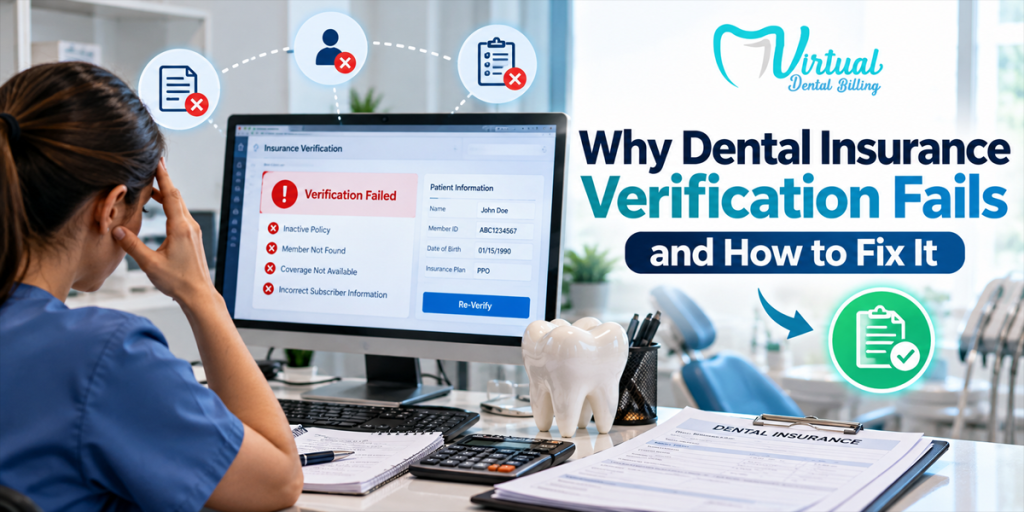
Your healthcare team reviews the payer portal, verifies coverage status, and creates a patient estimate. However, the ADA cautions that coverage information found at the portal or call center can be dated if an employer has not provided information about a coverage change. That means even if you’ve performed the Dental Insurance Verification Check on your office, you may be dealing with incorrect information.
If the claim presents differently than the estimate, your employees will go back over the estimate and determine the reasoning for the difference. In the meantime, the patient is asking what the reason is for the change in their anticipated payments, and it adds a challenging conversation for the team to follow up with later.
One of the issues is the availability of outdated information. The ADA states that even if treatment is preauthorized, it could be denied due to having crossed plan time limits, benefits being overdrawn, or eligibility being determined.
These are issues that happen at various points, and solving verification isn’t a matter of simply repeating an eligibility examination. Your group should discuss pros and cons of treatment (benefits) and document what was agreed upon and what is not.
This guide outlines the root cause of insurance verification mistakes and how to create a more transparent process before the patient gets to his or her treatment location.
What Should Dental Insurance Verification Actually Confirm?
Dental insurance verification should check the patient’s eligibility and the benefits relevant to the planned treatment. These checks work together: eligibility addresses whether coverage is active, while the benefit review examines how the plan may apply to the proposed service.
That distinction matters because an “active” response does not answer every question needed to prepare a patient estimate.
Start With Eligibility, Then Check the Planned Treatment
First, confirm that the patient and plan details match the records your office will use for the claim. Check the coverage dates against the planned date of service, and record when the information was obtained.
Once those details are checked, move to the treatment itself. Your team needs to understand which plan provisions could affect the expected benefit.
| Verification area | Question your team needs to answer |
| Patient eligibility | Does the available information show coverage for the planned service date? |
| Procedure benefits | How does the plan cover the proposed treatment? |
| Annual maximum and deductible | What amounts remain, and how might they affect the estimate? |
| Frequency limits and waiting periods | Do timing rules affect the planned service? |
| Provider network status | Which network terms apply to the treating provider? |
| Authorization and documentation | Does the plan require approval or supporting records? |
Treat unanswered questions as follow-up tasks rather than filling the gaps with assumptions.
Record What Was Confirmed and Where It Came From
After the review, save the information source, the date of the review, and the appropriate reference number. List any conditions or issues with the benefits along with the benefits themselves.
An “insurance verified,” for example, does not indicate to the next employee whether the roofing team has checked on a replacement limit for a crown. A little extra bit of information about that requirement will give the person who prepared the estimate something of value to look at.
Clear notes also provide when there are changes in the information about a payer. While eligibility responses may be incorrect if coverage changes are not reported to the insurer, the unspoken endorsement that a response is a payment promise is premature, the ADA warns.
Explain What the Estimate Can and Cannot Confirm
Note down the information confirmed and explain the anticipated contribution of insurance and patient contribution. When information on a benefit question is unanswerable, state that it is uncertain before stating estimates as facts.
The ADA does not necessarily mean that payment will be made based on the fact that it has been preauthorized. The benefits to be derived from treatment may differ from those sought at the time of the request for approval.
These checks are now in place which enables more readily to see where verification may falter. The following section deals with gaps that may prevent staff from having complete information when they mark the task as complete.
Why Does Dental Insurance Verification Fail?
Verification can break down when the information is outdated, the review stops too early, or the findings do not reach the person preparing the estimate. Each gap needs a different response, so start by identifying what was actually checked.
Active Coverage Is Treated as a Complete Answer
When a portal shows active coverage, staff may move straight to the patient estimate. However, that response alone does not explain how the plan applies to the proposed treatment.
For example, knowing that coverage is active does not confirm whether a replacement crown falls within the plan’s timing rules. If that question remains unanswered, the estimate rests on incomplete information.
To close the gap, keep patient eligibility and treatment-specific benefits as separate items on the verification checklist. Mark the review complete only when the relevant questions are answered or clearly recorded for follow-up.
The Information Changes Before Treatment
Even a careful check reflects the information available at that time. The ADA explains that payer portals and call centers may show outdated eligibility when an employer has not yet reported a coverage termination.
Because of this, an earlier response may no longer reflect the patient’s situation when treatment occurs. If the appointment moves or the patient reports a change in employment or insurance, review the affected details again.
Rechecking cannot eliminate every reporting delay, but it gives your team a chance to identify changes before relying on the earlier estimate.
General Benefit Percentages Replace Procedure-Level Checks
A benefit summary may show a percentage for a broad service category. Yet using that percentage without checking the proposed procedure can leave relevant limits unresolved.
The ADA notes that even preauthorized care may be denied because benefits have been exhausted or time limitations apply. That makes the remaining annual maximum and applicable timing rules part of the review, alongside the coverage percentage.
If the available information does not answer those questions, seek clarification rather than treating the percentage as a complete estimate.
Important Details Get Lost During the Handoff
The final gap can appear after verification is finished. One employee may record a coverage concern, but another may prepare the estimate without seeing it.
For example, an unresolved benefit question buried in a call note can disappear behind a simple “verified” status. The patient then receives an estimate without the qualification the first employee intended to communicate.
To prevent that disconnect, place unresolved questions beside the benefit summary and assign someone to follow up. With the gaps visible, your team can build a dental insurance verification checklist that carries the right information from the first check to the patient conversation.
How Can a Dental Insurance Verification Checklist Prevent Missing Information?
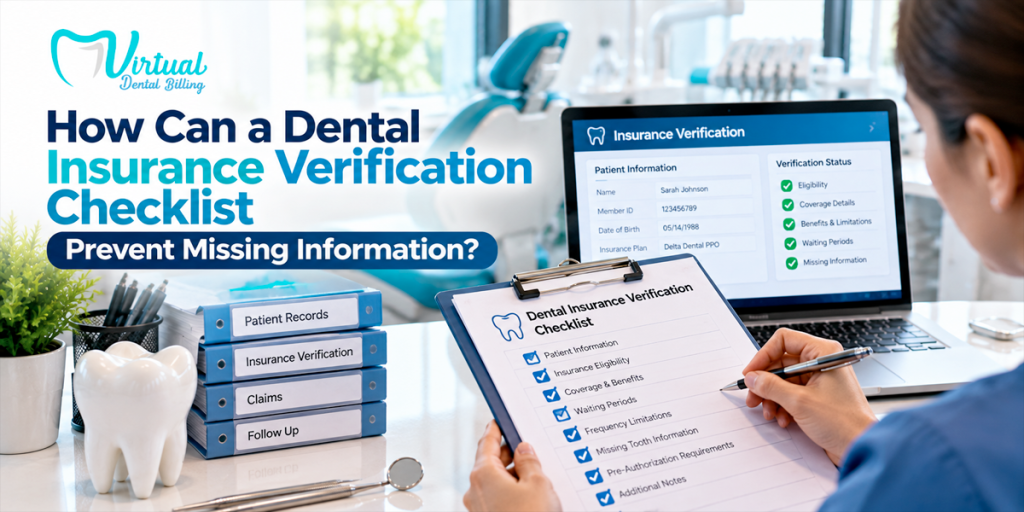
Use a checklist that follows the patient’s planned treatment from coverage review to the final estimate. Give each unanswered question an owner so the team knows what still needs attention before discussing costs with the patient.
The steps below are suggested office controls. Adapt them to the patient’s plan and the information available from the payer.
Follow the Same Review Order for Each Patient
- Confirm the patient and plan details. Match the patient’s information, subscriber details, member number, and group number with your records. Resolve any mismatch before reviewing benefits under that plan.
- Check coverage for the planned visit. Review the available eligibility dates against the date of service. Record when you checked and whether the patient reported any recent insurance changes.
- Review the proposed procedures. Use the treatment plan and applicable CDT codes to ask specific benefit questions. This gives the review a clearer basis than a general coverage category alone.
- Check the amounts used in the estimate. Record the reported remaining annual maximum, applicable deductible, and coverage percentage. Note any uncertainty that could affect the calculation.
- Review restrictions affecting treatment. Check relevant frequency limits, waiting periods, replacement rules, and authorization requirements. If an answer is missing, place it on the follow-up list.
- Confirm the provider’s network status. Check the treating provider and location against the patient’s specific plan. Use the applicable network information when preparing the estimate.
- Save the source and unresolved questions. Record the portal response or call details, verification date, and reference number when available. Assign each open question to someone responsible for resolving it.
- Review the estimate before sharing it. Confirm that the calculation reflects the information gathered. Explain any remaining uncertainty so the patient understands that the amount is an estimate.
Make the Checklist Useful During Staff Handoffs
Once the review is recorded, the next employee should be able to understand it without repeating the investigation. Keep the benefit summary and open questions together rather than spreading them across unrelated notes.
For example, “replacement limit needs confirmation” gives the estimator a clear reason to pause that part of the calculation. Adding an owner and follow-up date turns the note into an assigned task.
If your team needs help gathering these details, dental insurance verification services can provide support within an agreed workflow.
Recheck the Details That Have Changed
Before using an earlier verification, check whether the appointment, treatment, provider, or insurance information has changed. If it has, revisit the affected parts of the review and update the estimate where needed.
This matters because the ADA explains that benefits available at treatment can differ from those available when preauthorization was requested. Even an earlier approval should not be presented as guaranteed payment.
With the verification record complete, the next challenge is explaining it clearly. The patient conversation should reflect both what your team confirmed and what remains uncertain.
How Should Your Team Explain Insurance Estimates to Patients?
Explain what the plan is expected to contribute, what the patient may owe, and which details remain uncertain. Base that conversation on the completed dental insurance verification record so the explanation matches the estimate.
Start with the expected costs, then explain any plan provisions that could change them. This gives the patient a clear reason for the estimate instead of a number without context.
Connect the Estimate With the Benefits Reviewed
Show how the reported deductible, coverage percentage, and remaining annual maximum affect the calculation. If a frequency or replacement limit applies, explain its effect in plain language.
For example, if coverage for a replacement crown remains unconfirmed, tell the patient which question is outstanding. Simply saying “insurance should cover it” would hide the uncertainty your team has already identified.
Once that question is resolved, update the estimate and explain any change before the patient relies on the earlier amount.
Explain Why Verification Does Not Guarantee Payment
Patients may reasonably assume that “verified” means the insurer has agreed to pay. To avoid that misunderstanding, describe verification as a review of the information available from the plan.
The ADA notes that even preauthorized treatment may face a denial when eligibility changes, benefits are exhausted, or time limits apply. Explain this distinction when discussing approval or estimated benefits.
Your team could say: “We checked your benefits and used the information provided to prepare this estimate. Your plan will determine the final benefit when it processes the claim.”
If a specific issue remains unresolved, explain it directly rather than relying only on that general statement.
Keep the Explanation Consistent Across the Team
Record the estimate shared, any unresolved questions, and the explanation given to the patient. That gives another employee a reference if the patient calls back or the planned treatment changes.
If the eventual claim response differs from the estimate, compare it with the verification record before explaining the difference. Identify whether the issue involves coverage, claim processing, or information that changed.
For balances requiring further review, patient billing support can help manage account communication and follow-up. Keep any amount presented to the patient consistent with the reviewed account and applicable plan terms.
Clear communication completes the handoff from verification to the patient. The next step is reviewing unexpected claim outcomes so your office can identify which parts of its process need improvemen
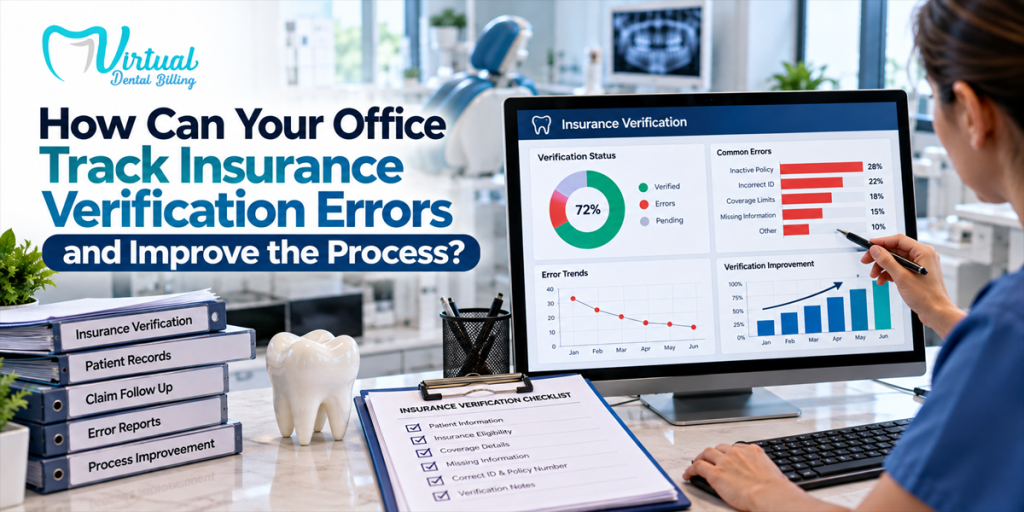
How Can Your Office Track Insurance Verification Errors and Improve the Process?
Compare unexpected claim outcomes with the original verification record, then identify where the information or workflow fell short. This helps your team choose a specific correction instead of repeating the entire process without knowing what went wrong.
Start with claims where the payer’s response differs from the estimate. Review the benefit information, treatment submitted, and explanation of benefits together before assigning a cause.
Find the Reason for the Difference
Not every unexpected balance comes from a verification mistake. The issue may involve changed eligibility, a missing benefit detail, claim information, or payment posting.
For example, if the payer cites a frequency limit, check whether your team reviewed and recorded that limit. If it was documented correctly, investigate how the information reached the person preparing the estimate.
However, if eligibility changed after the check, the original response may have reflected incomplete payer information. The ADA notes that employer reporting delays can affect the accuracy of portal and call-center responses.
Keeping these causes separate helps the office improve the steps it controls while documenting issues that require payer clarification.
Record the Cause and the Next Action
Once the team understands the difference, add it to a shared issue log. Keep the entry focused on what happened, what evidence supports the finding, and who will handle the next step.
| Finding | Suggested next action |
| Procedure-specific benefit was not checked | Add the missing question to the verification workflow |
| Confirmed limitation was left out of the estimate | Review the handoff and estimate calculation |
| Payer response conflicts with saved verification details | Request clarification and retain both records |
| Claim information differs from the treatment record | Refer the discrepancy for review before correction |
| Payment was received but posted incorrectly | Review the remittance and account posting |
This gives each issue a purpose beyond recording that a claim was unpaid. It also helps another employee continue the work without starting the investigation again.
Turn Repeated Findings Into Specific Changes
Review the log at a regular team check-in and look for recurring gaps. If replacement limits are repeatedly missed, strengthen that part of the checklist. If complete verification notes are overlooked, improve where the summary appears.
After making a change, review later examples to see whether the same problem continues. Track the number reviewed alongside the number with confirmed insurance verification errors, using the same definitions each time.
Meanwhile, keep unresolved claims assigned for follow-up. Dental accounts receivable recovery services can support that work while your office addresses the process behind it.
With those findings recorded, your team can identify where additional support would be useful. That creates a clearer starting point for deciding how Virtual Dental Billing fits into the workflow.