


Dental treatment costs continue to climb in 2026, so patients now check insurance coverage before making any decision about missing teeth. Several people expect insurance to handle most of the treatment costs. Later, they discover their plan only pays a small portion of the bill. This situation happens often with dental implants because insurance companies still place stricter limits on implant procedures compared to dentures.
Dental insurance usually pays more toward dentures because providers classify dentures as a standard tooth replacement treatment. Implant procedures involve surgery, multiple appointments, imaging, healing phases, and restorative work. Because of this, several insurance plans still treat implants as a major procedure instead of basic dental care.
Patients searching “does insurance pay for implants or dentures in 2026” usually want one clear answer. Dentures still receive broader insurance coverage in most cases. Implant coverage exists under several modern dental plans, yet yearly limits, waiting periods, and exclusions continue reducing reimbursement amounts.
How Dental Insurance Coverage Looks in 2026
Insurance companies now offer more implant-related benefits than previous years, especially under employer-sponsored dental plans. Still, coverage percentages vary heavily between providers.
Here’s what most patients see in 2026:
| Treatment Type | Average Insurance Coverage | Average Out-of-Pocket Cost |
|---|---|---|
| Full Dentures | 50% to 80% | Lower |
| Partial Dentures | 50% to 70% | Moderate |
| Single Dental Implant | 10% to 50% | Higher |
| Full Mouth Implants | Limited Coverage | Very High |
Several plans approve dentures faster because treatment costs remain lower and procedures stay less complex. Implant treatment often exceeds yearly dental maximums before the process even finishes.
Why Implant Costs Stay Higher Even With Insurance
Implant treatment includes several separate procedures. Insurance companies sometimes approve one stage while denying another. This creates confusion for many patients during treatment planning.
Typical implant treatment may include:
- Tooth extraction
- CT scans and imaging
- Bone grafting
- Implant post placement
- Healing period
- Crown placement
Each step carries separate billing codes and coverage rules. Because of this, patients often pay thousands out of pocket even after receiving insurance approval.
For example, a patient with a $2,000 yearly dental maximum may still pay over $3,500 personally for a single implant procedure costing $5,000.
Why Dentures Receive Better Insurance Support
Dentures cost less upfront, require less surgical work, and create lower risk for insurance companies. Therefore, reimbursement percentages stay much higher in most plans.
Several insurance providers also classify dentures under medically necessary tooth replacement. Implant treatment, meanwhile, still receives cosmetic classification under certain policies.
Patients choosing dentures often benefit from:
- Faster insurance approval
- Lower immediate costs
- Fewer surgical procedures
- Simpler treatment timelines
Still, long-term maintenance costs continue adding up over time because dentures usually require relining, repairs, and replacement every few years.
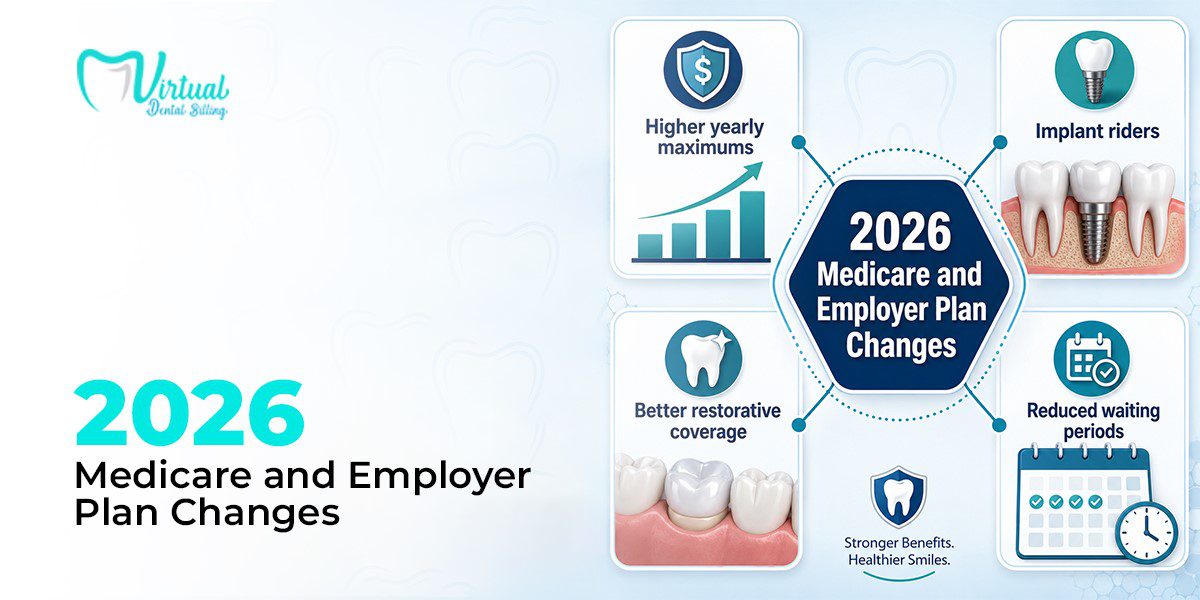
Medicare and Employer Plan Changes in 2026
Original Medicare still does not provide broad routine dental coverage for implants or dentures in 2026. Some Medicare Advantage plans now include expanded dental benefits, yet coverage varies heavily depending on provider and location.
Employer-sponsored dental insurance plans continue to offer stronger implant coverage compared to low-cost private plans. Several employers now provide:
- Higher yearly maximums
- Implant riders
- Better restorative coverage
- Reduced waiting periods
Patients with private marketplace dental insurance often face stricter implant limitations.
Checklist Before Starting Implant or Denture Treatment
Patients should review these details before approving treatment:
✔ Check yearly maximum limits
✔ Review waiting periods carefully
✔ Ask if implants receive partial coverage
✔ Confirm denture replacement frequency rules
✔ Request a pre-treatment estimate
✔ Check in-network provider requirements
✔ Review bone grafting exclusions
✔ Compare employer and private plan benefits
This checklist helps patients avoid unexpected dental bills later.
Questions Patients Should Ask Their Insurance Provider
Before starting treatment, patients should ask:
- Does my plan cover implants or only dentures?
- What percentage does insurance pay?
- Does the yearly maximum apply separately?
- Does the plan include missing tooth clauses?
- Which implant stages receive coverage?
- Does the plan cover implant crowns?
These questions often reveal hidden coverage limitations early.
What Insurance Usually Does Not Cover in 2026
Several patients hear the words “covered by insurance” and assume the treatment bill will stay small. Later, they discover multiple charges sitting outside their insurance benefits. This problem happens often with both dentures and dental implants because insurance companies apply strict limitations, yearly caps, and procedural exclusions.
Dental insurance in 2026 still leaves patients responsible for several treatment-related expenses. Implant procedures create the biggest financial gap because treatment involves surgical stages, restorative work, imaging, and healing appointments spread across multiple months.
Hidden Implant Costs Patients Often Miss
Dental implant treatment rarely includes full coverage from start to finish. Several plans only pay toward selected stages while excluding supporting procedures completely.
Patients often pay separately for:
- Bone grafting
- CT scans and digital imaging
- Sedation or anesthesia
- Temporary restorations
- Surgical guides
- Implant maintenance visits
- Replacement crowns
For example, Dental insurance might approve implant crown placement but deny the bone graft required before surgery. Patients then cover the graft expense fully from their own pocket.
Several providers also exclude implants placed for older missing teeth because of missing tooth clauses. This rule surprises many patients during claim review.
Denture Costs Insurance Still Leaves Behind
Dentures usually receive broader insurance support, yet coverage still comes with limits. Insurance providers often approve only basic denture materials. Patients choosing premium options usually pay extra costs themselves.
Several denture-related expenses stay partially uncovered:
- Premium denture materials
- Implant-supported dentures
- Relining procedures
- Denture repairs
- Frequent replacements
- Cosmetic upgrades
This situation creates frustration because patients expect dentures to remain fully affordable after insurance.
Why Yearly Maximums Create Problems
Yearly dental maximums remain one of the biggest financial barriers in 2026. Several plans still limit annual payouts between $1,000 and $2,500 despite rising dental treatment costs.
Implant treatment often exceeds these limits quickly because:
- Surgery costs stay high
- Multiple appointments increase billing
- Imaging and restorations receive separate charges
Patients with strong insurance plans still pay large out-of-pocket balances once the yearly maximum runs out.
How Waiting Periods Affect Coverage
Waiting periods continue delaying implant approvals under several dental plans. Some insurance companies require patients to wait:
- 6 months
- 12 months
- Sometimes longer for major procedures
Patients who begin implant treatment too early often receive claim denials even under active insurance coverage.
Dentures usually receive shorter waiting periods compared to implants, which explains why several patients choose dentures first while planning implants later.
Signs Your Insurance Plan Has Limited Implant Coverage
Patients should review these warning signs carefully before starting treatment:
- Low yearly maximums
- Long waiting periods
- Missing tooth clauses
- Cosmetic procedure exclusions
- No bone graft coverage
- Limited restorative benefits
- No implant rider included
These details often determine the real treatment cost more than the advertised coverage percentage.
How Patients Reduce Unexpected Dental Bills
Several patients lower treatment costs by planning procedures strategically. Dentists and billing teams often recommend:
- Splitting treatment between benefit years
- Using HSA or FSA accounts
- Requesting pre-treatment estimates
- Reviewing employer plan upgrades
- Choosing in-network specialists
Virtual Dental Billing helps dental practices guide patients through these decisions before claims become a financial burden. Their team supports insurance verification, benefit breakdowns, pre-treatment estimate reviews, and coverage coordination so patients understand potential out-of-pocket costs early in the process.
For instance, some patients complete implant surgery late in the year, then schedule crown placement after new yearly benefits begin. This method helps maximize insurance payouts across two calendar years instead of one.
How Patients Lower Implant and Denture Costs in 2026
Dental treatment costs continue rising in 2026, so several patients now search for ways to reduce implant and denture expenses before starting treatment. Insurance helps in many situations, yet smart financial planning often makes the biggest difference in the final bill. Patients who understand how dental benefits work usually avoid large surprise costs later.
Several dental offices now encourage patients to review insurance details before treatment planning begins. This approach helps patients understand yearly limits, waiting periods, and excluded procedures early instead of discovering problems during treatment.
Why Timing Matters for Insurance Coverage
Timing plays a huge role in reducing out-of-pocket expenses for dental implants and dentures. Several patients do not realize dental insurance benefits reset every calendar year.
Because of this, dentists often divide implant treatment across two benefit years.
For example:
- Implant surgery may happen in December
- Crown placement may happen in January
This method allows patients to use two yearly maximums instead of one. Several families save thousands of dollars through this strategy alone.
Why Pre-Treatment Estimates Matter
Pre-treatment estimates help patients understand expected insurance payments before treatment begins. Dental offices send planned procedures and billing codes directly to the insurance provider for review.
This process helps patients:
- Estimate personal costs early
- Understand coverage percentages
- Identify excluded procedures
- Prepare payment plans
- Avoid claim surprises
Patients who skip pre-treatment estimates often misunderstand how much insurance will truly pay.
Employer Plans Usually Offer Better Implant Coverage
Employer-sponsored dental insurance plans continue offering stronger implant benefits compared to many low-cost private plans in 2026. Several employers now include:
- Higher yearly maximums
- Implant riders
- Better restorative benefits
- Reduced waiting periods
Private marketplace plans often carry stricter exclusions and lower yearly payouts.
Patients considering implant treatment sometimes upgrade their employer dental plans during open enrollment periods to improve future coverage.
How HSA and FSA Accounts Help Reduce Costs
Health Savings Accounts and Flexible Spending Accounts help several patients lower dental expenses using pre-tax money. This method reduces the real financial impact of implant and denture treatment.
Patients often use these accounts for:
- Implant surgery
- Denture treatment
- Bone grafting
- Imaging costs
- Crown placement
- Follow-up appointments
Several families combine HSA funds with insurance benefits to reduce larger treatment balances.
Checklist Before Approving Dental Treatment
Patients should review this checklist carefully before signing treatment plans:
- Request a pre-treatment estimate
- Review yearly maximum limits
- Ask about implant exclusions
- Confirm waiting period rules
- Check bone graft coverage
- Compare employer and private plans
- Ask about financing options
- Review HSA or FSA eligibilit
- Confirm in-network provider status
These steps often prevent thousands of dollars in unexpected costs later.
Which Option Makes More Financial Sense in 2026?
Several patients compare implants and dentures only by looking at the starting price. This approach creates problems later because upfront cost tells only part of the story. Insurance coverage, replacement frequency, maintenance costs, comfort, and long-term durability all affect the real financial value of treatment in 2026.
Dentures usually create lower immediate expenses. Insurance companies also approve dentures more often and pay higher reimbursement percentages in most plans. Because of this, several patients choose dentures when budget remains the biggest concern.
Dental implants work differently. Implant treatment costs more upfront, yet implants often last much longer with proper care. Several patients eventually spend less on maintenance over time compared to repeated denture repairs, relining, and replacements.
Why Several Patients Still Prefer Dental Implants
Several implant patients choose long-term stability instead of lower starting costs. Implants stay fixed inside the jawbone, which improves chewing strength and speaking comfort. Dentures, meanwhile, may loosen gradually as jawbone changes happen over time.
Patients choosing implants often mention:
- Better comfort while eating
- More natural appearance
- Stronger bite force
- Reduced slipping while speaking
- Better jawbone support
These benefits continue influencing treatment decisions despite higher implant costs.
Why Dentures Still Make Sense for Many Patients
Dentures continue helping patients who need:
- Faster treatment
- Lower upfront costs
- Broader insurance coverage
- Non-surgical tooth replacement
Several older adults also choose dentures because surgery creates concern or bone density limits implant placement options.
Modern dentures now look more natural compared to older versions, which improves patient confidence during daily activities.
Long-Term Cost Comparison
Here’s where many patients change their perspective. Lower starting cost does not always mean lower long-term spending.
| Factor | Dentures | Dental Implants |
|---|---|---|
| Upfront Cost | Lower | Higher |
| Insurance Coverage | Better | Limited |
| Replacement Frequency | Every few years | Long-term |
| Maintenance Costs | Higher over time | Lower over time |
| Jawbone Support | Limited | Strong |
| Stability While Eating | Moderate | Strong |
Several patients replace dentures multiple times over their lifetime. Implant patients usually face fewer replacement expenses after treatment finishes successfully.
How Insurance Changes the Final Decision
Insurance coverage still remains one of the biggest deciding factors in 2026. Patients with stronger employer-sponsored dental plans often move toward implants because coverage reduces part of the financial burden.
Patients with:
- Low yearly maximums
- Strict waiting periods
- Implant exclusions
- Limited restorative benefits
often choose dentures because out-of-pocket implant expenses remain too high.
This situation explains why treatment decisions vary heavily between patients even under similar dental conditions.
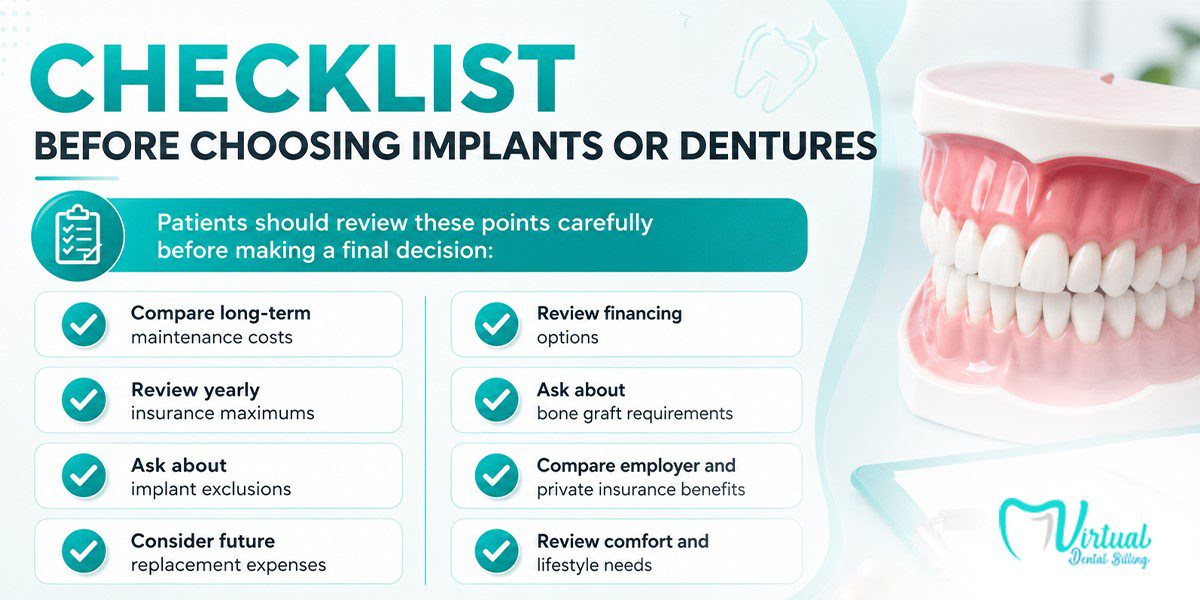
Checklist Before Choosing Implants or Dentures
Patients should review these points carefully before making a final decision:
✔ Compare long-term maintenance costs
✔ Review yearly insurance maximums
✔ Ask about implant exclusions
✔ Consider future replacement expenses
✔ Review financing options
✔ Ask about bone graft requirements
✔ Compare employer and private insurance benefits
✔ Review comfort and lifestyle needs
These details help patients make financially realistic decisions instead of reacting only to starting prices.
What Several Dentists Recommend in 2026
Several dentists now encourage patients to compare both immediate costs and long-term value before choosing treatment. Dentures may reduce short-term expenses, yet implants often provide stronger long-term stability for patients who qualify medically and financially.
Patients who fully understand their insurance benefits usually make better treatment decisions and face fewer billing surprises later.